
Losing a parent and inheriting their federal retirement savings often collides with your own plans to slow down and move abroad. Many people arrive at the non-lucrative visa holding a Thrift Savings Plan they did not build themselves — a mother's or father's TSP that has just passed to them as the named beneficiary. The natural question is whether that inherited balance can carry the means test. It can, but the mechanics are unusual, and they are not the same as the ones a surviving spouse faces.
This page is deliberately narrow. It is about a non-spouse beneficiary — an adult child, a sibling, a friend or a trust — inheriting a TSP and using the result to prove means for the visa. It is not about a surviving spouse who keeps a beneficiary participant account, not about your own living TSP as a federal pension, and not about a general gift or inheritance. The non-spouse case has one defining feature the others do not: the plan forces the money out. It is general orientation, not legal, tax or investment advice.
On this page
The short answer Why a non-spouse cannot keep the TSP Why the payout reads as savings, not a pension The choice at death: cash or inherited IRA The ten-year rule and durability Eligible designated beneficiaries Documents to gather The tax and reporting lane At a glance Frequently asked questions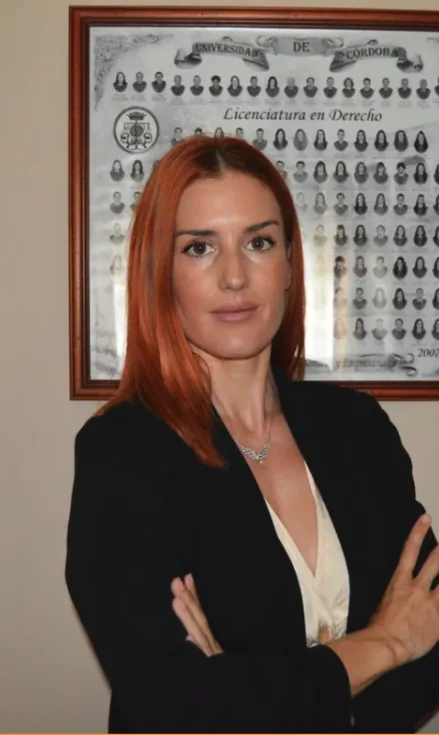
"When a non-spouse inherits a TSP, the first thing I explain is that they will never have a federal pension account of their own from it — the plan pays it out and the money becomes theirs to hold and document. That is not a problem for the visa; it just changes the story. We treat it as savings, we lead with the death-benefit paperwork and the receiving account, and we make sure the total covers the household for the period. Where the ten-year rule shortens how long the money lasts, we plan the file around the renewals rather than pretend the balance is permanent."
— Lola Jurado · Registered lawyer, Ilustre Colegio de Abogados de Málaga (nº 10907)
The short answer
The non-lucrative visa asks for sufficient, stable means for the applicant and any dependents, without working in Spain. An inherited TSP can satisfy that logic, but for a non-spouse it does so as savings rather than income. The reason is structural: the plan will not let a non-spouse beneficiary keep the account, so there is no ongoing federal payment to present. What you have instead is a lump the plan pays out, which you either take as cash or move into an inherited IRA.
So the honest framing for the file is a pot, not a pension. That is perfectly fine — the means test can be met with savings — but the analysis is about total sufficiency and provenance, not a monthly figure. If you build a stream of distributions from an inherited IRA, present that as a plan you control, while being clear that it draws down a finite balance rather than a lifetime benefit.
Why a non-spouse cannot keep the TSP
The Thrift Savings Plan treats spouse and non-spouse beneficiaries very differently. A surviving spouse can leave the inherited money inside the TSP in a beneficiary participant account and keep it invested there, which is what the spouse-beneficiary page covers. A non-spouse beneficiary has no such option. The plan does not maintain accounts for non-spouse heirs, so once the beneficiary is confirmed, the death benefit has to leave the TSP.
That single rule drives everything else on this page. There is no version of the story where a non-spouse shows a continuing TSP statement year after year the way a retiree shows their own federal pension. The moment of inheritance is also the moment the federal wrapper ends. What survives is money — either cash in your bank or a balance in an inherited IRA — and it is that money, not the TSP itself, that appears in the visa file. A private employer plan works on the same forced-payout logic but is set by each employer's plan document rather than one federal rulebook; if you inherited a corporate 401(k) or a 403(b) instead, see the non-spouse inherited 401(k)/403(b) page.
Why the payout reads as savings, not a pension
Because the money must come out, a consulate reads it the way it reads any balance: as savings that must be large enough to cover the applicant and dependents across the years the visa and its renewals span. A pot is finite, so the file has to show it is sufficient and that it genuinely belongs to you. Unlike a lifetime pension, there is no promise of the payment continuing indefinitely — the durability lives in the size of the balance and, if you choose, in the drawdown plan you build on top of it.
The payout also introduces a timing question that a steady pension avoids. A large credit landing in your account shortly before you apply looks like a fresh deposit that needs explaining, not a seasoned balance. The answer is provenance: the TSP death-benefit paperwork, the beneficiary confirmation, and account statements tracing the money from the plan to you. Handled cleanly, an inherited TSP payout is strong savings evidence; the work is in the paper trail, not in dressing it up as monthly income.
The choice at death: cash or inherited IRA
A non-spouse beneficiary usually faces two paths, and the choice shapes both your taxes and your visa file. The first is a taxable single payment: the TSP pays the death benefit in cash, with mandatory federal withholding on the taxable portion. That can strip a large slice off the top in a single tax year and leave you with a smaller net balance to show. The second is a direct rollover into a properly titled inherited IRA, which preserves the tax deferral and keeps more capital intact for the means test. A non-spouse cannot use a sixty-day rollover, so any transfer has to go directly from the plan to the inherited IRA custodian.
For the visa, the inherited-IRA route usually presents better simply because more money survives and the account statements are clean, ongoing evidence you can update at renewal. Our guide to a rollover before moving to Spain explains the trustee-to-trustee mechanic, though note it is written for a living owner moving their own TSP; a non-spouse inherited transfer is similar in spirit but must land in a beneficiary IRA, not your personal one. Whether cash or rollover is better overall is a tax and financial decision to settle first, then document.
The ten-year rule and durability
If you move the money into an inherited IRA, the balance is not yours to stretch across a lifetime. Under the SECURE Act, most non-spouse beneficiaries must empty an inherited IRA by the end of the tenth year after the original owner's death. That does not weaken your file today — the balance still proves savings now — but it caps durability. Any recurring distributions you show will end, and the account is a ten-year resource, not a permanent one. The mechanics of that clock, including which years require minimum distributions, are covered in the ten-year rule page.
For a multi-year residence with renewals, that ceiling matters. If the inherited balance alone will not comfortably cover the household through several renewal cycles once the ten-year window closes, pair it with other recurring income or a separate savings cushion rather than relying on the inherited account to last forever. Planning the means across the full horizon — not just the first application — is what keeps a renewal from stalling. This is still more durable than a non-spouse inherited HSA, where the account stops being an HSA at death and the visa file is simply built around the net lump sum left after medical-bill and tax planning.
Eligible designated beneficiaries
The ten-year rule is the default, but a subset of heirs, called eligible designated beneficiaries, are treated differently. A minor child of the participant, a disabled or chronically ill beneficiary, or a beneficiary who is not more than ten years younger than the deceased may be able to stretch distributions over a longer period rather than clearing the account within ten years. A minor child of the participant typically shifts to the ten-year rule once they reach the age of majority.
If you fall into one of these categories, the durability story improves, because a longer stretch means the inherited IRA can support a recurring drawdown across more years. It does not change the fundamental point — a non-spouse still cannot keep the TSP itself — but it does affect how long the money that comes out of it can realistically anchor a visa file. Whether you qualify is a technical tax question worth confirming with a US adviser before you build the file around it.
Documents to gather
The evidence depends on which path you took. In both cases, start with the TSP death-benefit paperwork: the beneficiary confirmation and the payment or rollover election showing you as a non-spouse beneficiary and what you chose. If you took the cash payment, add bank statements showing the funds landing and settling, plus any tax paperwork that explains the withholding. If you did a direct rollover, add the inherited IRA statements showing the balance, the account title identifying it as a beneficiary IRA, and a record of any distributions you have taken or plan to take.
Then add a short cover note that says, in plain terms, that you are a non-spouse beneficiary, that the TSP was paid out because you could not keep it in the plan, what you elected, and how the resulting balance or distributions cover the applicant and any dependents. If any documents are foreign official records, check apostille and sworn-translation needs in the apostille and translation guide. Because the balance is in dollars, convert it with a defensible approach from the exchange-rate proof page.
The tax and reporting lane
How you inherit and how you are taxed are separate questions from the visa. A taxable single payment can create a large US tax event in the year received, while a direct rollover into an inherited IRA generally defers that until distributions are taken; inherited IRA distributions are then taxable as they come out. Once you become Spanish tax resident, Spain generally looks at worldwide income, so any distributions are reviewed under Spanish rules and the US-Spain treaty, regardless of how the US treated the original inheritance.
An inherited IRA or a cash balance sitting in an account is also an asset for foreign-asset reporting, Modelo 720, and, depending on your region and overall balance sheet, wealth tax. Keep the lanes separate: the immigration file should show stable, sufficient means without turning into a tax memo, and the tax plan should then classify the inherited account, the distributions and the reporting correctly. The election that is best for your taxes and the one that is easiest for your visa are not always the same, which is another reason to settle the finances first.
At a glance
| Situation | How it reads for the visa | Best evidence or fix |
|---|---|---|
| Non-spouse inherits TSP | No account to keep; money is paid out | Death-benefit election and beneficiary confirmation |
| Taxable single payment (cash) | Savings, reduced by withholding and tax | Bank statements plus tax paperwork; show net balance is sufficient |
| Direct rollover to inherited IRA | Savings; more capital survives | Beneficiary IRA statements and account title; source-of-funds trail |
| Regular inherited-IRA distributions | A stream you control, but finite | Distribution schedule; note the ten-year cap on durability |
| Ten-year rule applies | Durability capped at ten years | Pair with other income or savings for later renewals |
| Eligible designated beneficiary | Longer stretch improves durability | Confirm eligibility with a US adviser; document the stretch |
Frequently asked questions
Can a non-spouse keep an inherited TSP like a surviving spouse can?
No. The Thrift Savings Plan only lets a surviving spouse keep the money inside the plan as a beneficiary participant account. A non-spouse beneficiary — an adult child, sibling, friend or anyone else — cannot hold a TSP account. The plan must pay the death benefit out, either as a taxable single payment or as a direct rollover into a properly titled inherited IRA. So for a non-spouse there is no continuing TSP pension to show; there is a finite pot to document.
Does an inherited TSP count as income or savings for the visa?
Because a non-spouse must take the money out of the TSP, it reads as savings rather than a recurring pension. The non-lucrative visa can be met with sufficient savings, but the file is judged on whether the total covers the applicant and dependents for the period, not on a monthly figure. If you move it into an inherited IRA and draw regular distributions, you can shape a recurring-looking stream, but the ten-year rule means it empties over time, so plan the durability across renewals.
What is the choice at death for a non-spouse TSP beneficiary?
Two main options. A taxable single payment pays the death benefit in cash, with mandatory federal withholding on the taxable portion, so a large slice can be lost to tax in one year. A direct rollover moves the benefit into an inherited IRA, preserving tax deferral and keeping more capital intact. A non-spouse cannot do a sixty-day rollover, so the transfer must go trustee-to-trustee. Which is better is a tax and financial decision to take before you build the visa file.
How does the ten-year rule affect proving means?
Most non-spouse beneficiaries must empty an inherited IRA by the end of the tenth year after the original owner's death under the SECURE Act. That does not stop the balance from proving savings today, but it does cap durability: the account is not a lifetime stream, and any recurring distributions you present will end. Certain eligible designated beneficiaries — a minor child of the participant, a disabled or chronically ill person, or someone not more than ten years younger — may stretch distributions differently.
What documents prove an inherited TSP for the visa?
Gather the TSP death-benefit election or payment confirmation, the inherited IRA account statements if you rolled it over or the bank statements if you took the cash, and a short cover note explaining that you are a non-spouse beneficiary, what you elected, and how the resulting balance or distributions cover the household. If any documents are foreign official records, check apostille and sworn-translation needs, and convert dollar balances with a defensible exchange rate.
Sources reviewed July 2026: Spanish Ley Orgánica 4/2000 and the Reglamento de Extranjería (Real Decreto 1155/2024, in force 20 May 2025) on sufficient and stable means for non-lucrative residence and the prohibition on gainful activity; consular practice on recurring income, savings sufficiency, source-of-funds evidence and applicant-owned resources; general US Thrift Savings Plan death-benefit rules distinguishing spouse beneficiary participant accounts from non-spouse payouts, mandatory withholding on taxable single payments, direct (trustee-to-trustee) rollovers to inherited IRAs and the bar on sixty-day rollovers for non-spouse beneficiaries; the SECURE Act ten-year rule and eligible-designated-beneficiary categories for inherited retirement accounts; and general US-Spain tax-treaty, Spanish residence-taxation, foreign-asset reporting and wealth-tax principles. General information only, not legal, tax, retirement or investment advice. Inheritance and rollover choices are personal financial and tax decisions; confirm current consular requirements, the IPREM value in force, exchange-rate treatment and tax consequences, and consult qualified US and Spanish advisers, before relying on an inherited TSP in a visa file.