
Not every self-employed activity in Spain is freely open to anyone who wants to pursue it. For a large group of professions — lawyers, doctors and other health professionals, architects, engineers, psychologists, veterinarians and more — the right to practise is regulated by law and by the profession's own bodies. If your intended activity falls into that category, a self-employed (cuenta propia) residence permit is not simply a question of a viable business plan and adequate means: the application must also demonstrate that you are legally entitled to carry on the profession in Spain. In practice that usually turns on two linked requirements — recognition of your foreign qualification and, where the profession requires it, colegiación (registration with the relevant professional college). This page explains how those requirements fit into a cuenta propia file, how recognition works, why it can take time, which activities also need municipal or sector licences, and how to plan the sequence so licensing does not block the visa.
On this page
When your profession is regulated The permit must show you can legally practise Recognition of a foreign qualification: homologación and reconocimiento How long recognition can take Colegiación: registering with the professional college Municipal and opening licences (licencia de apertura) Sector authorisations Documents, apostille and sworn translation Planning the timeline so licences don't block the visa Frequently asked questions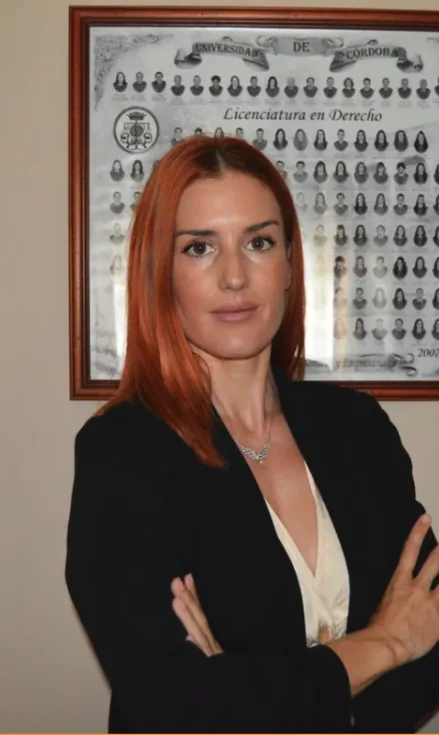
"For a regulated profession, I check two separate things: that your foreign qualification is recognised and your colegiación in place, and that any premises and sector licences the activity needs are secured. Both must line up before we can show you may lawfully practise here."
— Lola Jurado · Immigration lawyer, Ilustre Colegio de Abogados de Málaga (nº 10907)
When your profession is regulated
A regulated profession is one whose access or exercise is reserved, by law, to people who hold a specific qualification or meet defined conditions — and often to those admitted to the relevant professional body. The classic examples are the legal profession, medicine and the other health professions, architecture, the various branches of engineering, and psychology, but the list is broader and depends on Spanish rules. The common thread is that you cannot simply declare yourself a practitioner: the state, or a body acting under its authority, controls who may lawfully hold themselves out as, and work as, a member of that profession.
The first practical step in any self-employed file involving a professional activity is therefore to establish, precisely, whether the intended activity is regulated in Spain and what conditions attach to it. Two people describing themselves loosely as "consultants" may be in completely different positions: one carrying on an unregulated advisory activity that can begin as soon as the permit and autónomo registration are in place, the other proposing to practise a reserved profession that first requires recognition of a foreign degree and admission to a college. Getting this classification right at the outset shapes the entire application.
The permit must show you can legally practise
A self-employed permit authorises you to carry on an economic or professional activity on your own account. But the authorities do not grant a permit to do something you would not, in fact, be allowed to do. Where the activity is a regulated profession, the file must therefore address a question that goes beyond viability and means: are you legally entitled to exercise this profession in Spain?
The permit does not, by itself, confer the right to practise a regulated profession. You must separately show that you meet the profession's own conditions to practise in Spain.
This matters because the immigration authorisation and the professional entitlement are distinct things. A permit will not turn an unrecognised foreign qualification into a Spanish one, nor will it substitute for membership of a college where membership is required. If the profession is regulated, the credible way to satisfy the application is to show that the professional requirements are met, or that they are on a clear path to being met — that the qualification is recognised (or its recognition is underway) and that colegiación is in place or will follow. An application that presents a regulated activity without addressing how the applicant is entitled to practise it invites delay and refusal. Our broader guide to the self-employed residence permit sets out how these professional requirements sit within the wider set of conditions.
Recognition of a foreign qualification: homologación and reconocimiento
For most regulated professions, the entitlement to practise begins with getting your foreign qualification accepted in Spain. This is where two related concepts appear: homologación and reconocimiento.
In broad terms, homologación is the process by which a foreign qualification is declared equivalent to a corresponding Spanish official qualification, so that it produces the same effects — including, where relevant, access to a regulated profession. Reconocimiento (recognition) is a related route through which a foreign qualification, or foreign professional qualifications, are recognised for the purpose of practising a specific regulated profession in Spain. Which procedure applies, and to which authority the file goes, depends on the qualification, the profession and the applicant's situation; the terminology and the competent body differ from case to case, and the rules can change.
What is consistent is the purpose: before you can be admitted to practise a reserved profession in Spain, the Spanish system generally needs to have accepted your foreign qualification through the appropriate procedure. For a self-employed applicant, this means recognition is not an afterthought that can be handled once you have arrived — it is frequently a precondition for the colegiación that the profession requires, and therefore a precondition for lawfully carrying on the activity the permit is meant to authorise.
How long recognition can take
One of the most important things to understand about recognition is that it can be slow, and that the pace is largely outside the applicant's control. The time a homologación or reconocimiento file takes depends on the profession, the specific qualification, the country where it was obtained, the completeness of the documentation and the workload of the authority handling it. Some files move faster than others; some encounter requests for additional documents, further evidence of the content of studies, or supplementary requirements that add months.
We deliberately avoid quoting fixed durations, because they vary by case and change over time, and it would be misleading to suggest a figure that might not hold for your situation. The point to take away is not a number but a principle: recognition can take a long time, so it should be started as early as possible. Treating it as the first task rather than the last is often what determines whether the professional side of the file is ready when the immigration side is. Where recognition is still in progress, a well-prepared application can at least show that the process has been formally commenced and is being pursued — evidence that the applicant is genuinely on the path to being entitled to practise.
Colegiación: registering with the professional college
Beyond recognition of the qualification, many regulated professions in Spain require colegiación — registration with the relevant colegio profesional — as a condition of practising. The colegios are the professional bodies for each field: bar associations for lawyers, medical colleges for doctors, colleges of architects, of engineers, of psychologists, and so on. Where the profession requires it, you may not lawfully hold yourself out as a practitioner, or carry on the reserved activity, without being a member of the relevant college.
For a self-employed application, colegiación therefore sits alongside recognition as part of demonstrating that you can legally practise. Typically, admission to a college depends on first having your qualification recognised, so the two requirements are connected: recognition unlocks colegiación, and colegiación unlocks lawful practice. The self-employed file should show where you stand in this chain — whether you are already admitted, whether admission is pending on the strength of a completed recognition, or whether recognition is still underway and colegiación will follow.
Colegiación is not a formality bolted on at the end. For a regulated profession it is part of the legal entitlement to practise, and it usually depends on the recognition step that comes before it.
The specific requirements for admission — documentation, fees, professional-liability arrangements, any local conditions — vary from college to college and from profession to profession. What matters for planning is to identify, early, exactly which college governs your intended activity and what its conditions of admission are, so that the timing of colegiación can be built into the overall plan rather than discovered late.
Municipal and opening licences (licencia de apertura)
Recognition and colegiación are about the person and the profession. A separate layer concerns the premises and the activity. Where your self-employed activity is carried on from a physical establishment — a clinic, a practice, a studio, a workshop, a shop — it may require a municipal opening licence (licencia de apertura) or, depending on the activity and the municipality, a form of prior communication or responsible declaration that allows the activity to begin subject to compliance.
These municipal requirements are distinct from the professional ones. A recognised, college-registered professional still needs their premises to be lawfully authorised for the activity carried on there, and the conditions — technical, safety, health, urban-planning — depend on the type of activity and on local rules that vary between municipalities. Some activities are treated as low-impact and can begin with a straightforward declaration; others, particularly those with health, safety or environmental implications, face more demanding authorisation. For a self-employed applicant relying on a physical establishment, understanding which regime applies to the premises is part of showing that the activity can lawfully operate.
Sector authorisations
On top of professional entitlement and premises licensing, some activities require specific sector authorisations before they may lawfully operate. Health-related services, certain regulated commercial activities, activities involving particular substances or equipment, and various specialised fields can carry their own permits, registrations or authorisations issued by the competent authority for that sector.
These sector requirements sit alongside — not instead of — the professional and municipal ones. A health professional, for instance, may need recognition of their qualification, colegiación, an authorised premises and, in addition, sector-specific authorisation of the healthcare activity itself. The precise combination depends entirely on the nature of the activity, so the reliable approach is to map, for your specific project, every layer of authorisation the activity engages: professional, municipal and sector. Identifying all of them at the planning stage is what prevents an unwelcome discovery — that a further authorisation is needed — once the immigration side is already in motion.
Documents, apostille and sworn translation
A file that involves recognition of a foreign qualification is document-intensive, and the documents in question — degrees, transcripts, professional certificates, evidence of the content and duration of studies — are precisely the ones that most often require legalisation and translation before Spanish authorities will accept them.
- Legalisation and apostille — foreign public documents, including qualification documents, generally need to be legalised, most commonly through the apostille under the Hague Convention, so that they are recognised in Spain.
- Sworn translation — documents not in Spanish usually require an official (sworn) translation into Spanish, carried out by a translator authorised for that purpose.
Because recognition procedures scrutinise the content of a qualification closely, the documentary preparation here is often more involved than for a purely commercial activity: transcripts and syllabus evidence may need to be obtained from the awarding institution, apostilled and translated. These steps take time and should be sequenced early, alongside — not after — the recognition application. Our guide to apostille and sworn translation explains how these two steps work and how to plan them.
Planning the timeline so licences don't block the visa
The central practical challenge of a self-employed application in a regulated profession is sequencing. The immigration file and the professional-licensing chain run on different clocks, and the licensing chain — recognition, then colegiación, then any premises and sector authorisations — is the one most likely to be slow and least within the applicant's control. If it is left until late, it can hold up the whole project.
The way to manage this is to treat the professional requirements as a parallel workstream that begins as early as possible, rather than a step that waits for the immigration decision. In broad terms, that means: identifying at the outset whether the profession is regulated and exactly which authorities and colleges are involved; commencing the recognition of the qualification early, with the documents apostilled and translated in good time; mapping the colegiación requirements so admission can follow recognition without avoidable delay; and identifying any premises or sector licences the activity will need. Where recognition cannot realistically be completed before the immigration application, the file can at least demonstrate that the process has been properly started and is being actively pursued.
The professional-licensing chain is usually the slowest part and the least within your control. Start it first, run it in parallel, and the visa is far less likely to be held up by it.
This is also where the immigration and professional analyses have to be coordinated rather than handled in isolation. The route you apply through, the evidence of viability, and the professional entitlement all have to line up: a plan to practise a regulated profession only holds together if it shows, credibly, that the applicant will be entitled to practise it. Aligning the two sides from the beginning — and building the licensing timeline into the plan — is what keeps a regulated-profession file on track. If part of your project is investment-led rather than purely professional, our note on self-employed requirements and investment covers how the financial side is assessed.
Frequently asked questions
Does the self-employed permit let me practise a regulated profession automatically?
No. The permit authorises self-employed activity, but it does not confer the right to practise a regulated profession. For a reserved profession you must separately show that you are entitled to practise in Spain — normally through recognition of your qualification and, where required, colegiación.
What is the difference between homologación and colegiación?
Homologación (or reconocimiento) is the recognition of your foreign qualification in Spain. Colegiación is registration with the relevant professional college. For many regulated professions you need recognition first and colegiación after, and both may be required before you can lawfully practise.
How long does recognition of my qualification take?
It varies by profession, qualification, country of origin and the authority's workload, and it can take a significant time. Because of this we do not quote fixed durations; the practical advice is to start recognition as early as possible so it does not hold up the visa.
Do I also need an opening licence?
If your activity is carried on from a physical establishment, it may need a municipal opening licence (licencia de apertura) or an equivalent declaration, depending on the activity and the municipality. This is separate from the professional requirements and should be checked for your specific premises and activity.
Can I apply for the visa while recognition is still pending?
It depends on the case. Where recognition cannot be completed first, a well-prepared file can at least show that the process has been formally started and is being actively pursued, which supports the credibility of a plan to practise a regulated profession. This should be assessed for your specific situation.
General information, not legal advice. The recognition of foreign qualifications, colegiación, opening licences and sector authorisations are governed by rules that vary by profession, qualification, country of origin, municipality and year, and that are subject to change. Requirements and timelines must be confirmed for your specific circumstances. No lawyer–client relationship is created by this page.