
For a Dane, moving to Spain is legally one of the simplest relocations there is. Denmark is a member state of the European Union, so you enjoy the right to live, work and retire anywhere in the EU without a visa or residence permit. That single fact removes the biggest obstacle that citizens of the United States, the United Kingdom or Asia face when they look at Spain. What remains for Danes is more administrative than it is dramatic — but it is real, and getting it right in the first months protects you from expensive surprises later. This guide walks through the practical steps in the order they usually matter.
On this page
No visa — but you still register The green NIE and EU registration Empadronamiento — your town-hall registration Becoming a Spanish tax resident The Denmark–Spain treaty question Danish pensions and how they are taxed Healthcare — from EHIC to the S1 and the Spanish system Where Danes settle — Costa del Sol and Costa Blanca The Danish and Nordic community A first-months checklist Frequently asked questions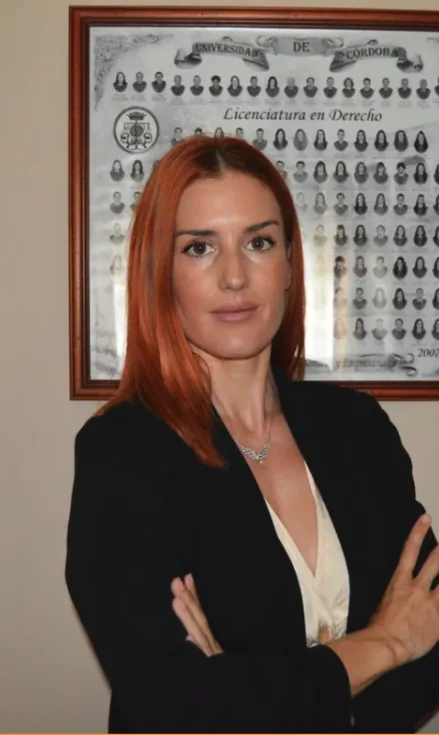
"For a Dane the immigration side is easy — it's the tax and pension side, and that old treaty question, that repay a careful conversation before you move. Every case is different, so let's map yours."
— Lola Jurado · Immigration lawyer, Ilustre Colegio de Abogados de Málaga (nº 10907)
No visa — but you still register
Let us start with the good news and be precise about it. As a Danish national you do not apply for a Spanish visa, and you do not apply for a residence permit in the way a non-EU citizen would. You simply arrive. You may enter Spain on your Danish passport or national ID card and remain for up to three months with no formality at all.
The obligation arises once you intend to stay longer than three months. At that point Spanish law requires EU citizens who reside in the country to register on the Central Register of Foreign Nationals. This is not a discretionary permission that Spain can refuse to a qualifying EU citizen — it is a registration of a right you already hold. But it is a formal step with its own documents and appointments, and skipping it causes friction with banks, employers, the health system and the tax office down the line.
The green NIE and EU registration
The document Danes hear about most is the NIE — the Número de Identidad de Extranjero, your foreigner's identification number. For an EU citizen who registers as a resident, the NIE typically arrives on a green certificate, either a small card or an A4 sheet, universally nicknamed the "green NIE" or "green card" (nothing to do with the American document of the same name). It confirms your identity number and your registration as an EU resident.
To register you generally attend a National Police station or Oficina de Extranjería with an appointment and show that you meet the conditions Spain sets for EU residents: broadly, that you are working, self-employed, a student, or that you have sufficient resources and health cover so as not to become a burden on the Spanish system. Retirees and remote earners usually satisfy this through proof of income or pension and private or public health cover. The exact evidence requested varies by province and even by office, which is one reason many Danes prefer to have the appointment and paperwork handled for them rather than risk a wasted trip.
The green NIE is a registration of a right you already have as an EU citizen — but the documents and appointment are real, and provinces differ on exactly what they ask for.
Empadronamiento — your town-hall registration
Alongside the NIE sits a separate and equally important step: the empadronamiento, your registration at the local town hall (ayuntamiento) as a resident of a particular municipality. The certificate it produces, the certificado de empadronamiento or padrón, proves where you live. You will need it repeatedly — to register with the health centre, to enrol children in school, to exchange a driving licence, and often as part of the EU registration itself.
Empadronamiento is usually straightforward: proof of address (a rental contract, deed or utility bill), your passport and the completed form. But sequencing matters, because some offices want the padrón before the NIE and others the reverse, and appointment availability on the busy stretches of coast can be slow. For a fuller walk-through, see our guide to the empadronamiento process.
Becoming a Spanish tax resident
Here is the point Danes most often misunderstand: registering as an EU resident and becoming a Spanish tax resident are two different things. The green NIE does not, by itself, make you a tax resident, and being a tax resident does not depend on holding the certificate.
Spain tests tax residency mainly on presence and economic ties. Broadly, you are treated as a Spanish tax resident in a calendar year if you spend more than 183 days in Spanish territory during that year, or if the main base of your economic activities or interests is located in Spain. A third factor looks at whether your spouse and dependent children habitually reside in Spain. Once you cross into Spanish tax residency, Spain generally taxes your worldwide income, not merely income arising in Spain — which is precisely why the interaction with Denmark deserves care. The mechanics of the day-count, including how absences are treated, are set out in our note on the 183-day rule.
One further point that interests some higher earners and professionals moving from Denmark: as an EU citizen relocating for work you may, if you qualify, be able to elect Spain's special expatriate tax regime (the Beckham Regime), which taxes qualifying income under favourable rules for a limited period. Eligibility is specific and must be assessed against your own situation, but it is worth knowing the option exists rather than assuming ordinary progressive rates are the only path.
The Denmark–Spain treaty question
This section carries the most important caution in the whole guide, and Danes should read it twice. Most countries that send retirees and residents to Spain have a double-taxation treaty in force that allocates taxing rights between the two states and prevents the same income being taxed twice. Denmark is unusual: Denmark terminated its long-standing double-taxation treaty with Spain, with effect from 2008, and for many years there was no comprehensive treaty in place between the two countries. The termination was driven largely by a dispute over how Danish pensions paid to residents of Spain were being taxed, so this is not an abstract technicality — it goes to the heart of the pensioner's position.
Why does this matter so much? Because in the ordinary case a treaty is what stops your Danish pension being taxed in full in both countries, and it is what decides which country gets first claim. Where the treaty picture is uncertain or has changed, the risk of double taxation or of an unexpected Spanish liability is genuinely higher, and it depends on the type of income involved. This is not a reason to abandon the move — thousands of Danes live happily on the Spanish coast — but it is a reason to plan the tax side deliberately rather than assume it mirrors, say, a German or a British retiree's experience.
Danish pensions and how they are taxed
Danish retirement income is rarely a single stream, and the different components can be treated differently once you live in Spain. A typical Danish pensioner might draw some combination of the state old-age pension (folkepension), the ATP labour-market supplement, and one or more occupational or private pensions built up in Danish pension providers. Each of these can raise its own questions about where it is taxable and how, and the answer interacts directly with the treaty point above.
- State and public pensions — the allocation of taxing rights on public pension income is exactly the kind of thing a treaty normally settles, so the current Denmark–Spain position must be checked.
- Occupational and private pensions — the timing of when contributions were made, and whether the pension was built up on tax-favoured terms in Denmark, can influence the treatment; this is fact-specific.
- Lump sums versus regular payments — a one-off lump-sum withdrawal can be treated very differently from a monthly pension, so the form in which you take the money matters, not just the amount.
The honest summary is that Danish pension taxation for a Spanish resident is one of the more technical corners of cross-border tax, precisely because of the treaty history. It is well worth modelling your specific pension mix before you become a Spanish tax resident, so there are no surprises in your first Spanish tax return.
Healthcare — from EHIC to the S1 and the Spanish system
Healthcare access follows a familiar EU pattern, and it changes as your stay deepens. In the earliest phase, before you are settled, your Danish EHIC (European Health Insurance Card) covers necessary care during a temporary stay — useful in the first weeks but never a substitute for proper cover once you actually live in Spain.
Once you become a resident, the route into Spanish public healthcare depends on your status. If you are a Danish pensioner whose pension entitles you to Danish healthcare cover, the S1 form is the classic mechanism: it lets Denmark continue to bear the cost of your healthcare while you access the Spanish public system on the same terms as a local. You register the S1 with the Spanish social-security authorities and then with your local health centre, using — again — your empadronamiento. Workers and the self-employed who pay Spanish social security contributions instead access the system through their contributions. Those who fit neither category may use private insurance or, in some regions, a special paying-in arrangement. For the practical steps of enrolling, see our guide to healthcare registration for new residents.
Many Danes, especially in the first year or while the paperwork settles, also keep a private Spanish health policy. The public system on the coast is good, but private cover buys speed, English- or Danish-speaking clinics, and peace of mind during the transition.
Where Danes settle — Costa del Sol and Costa Blanca
Danes have been part of the Spanish coastal landscape for decades, and they tend to concentrate in two broad areas. On the Costa del Sol, the stretch around Málaga, Fuengirola, Benalmádena, Torremolinos, Marbella and Mijas is a long-established Nordic heartland. Fuengirola in particular has such a settled Scandinavian presence that it supports Nordic schools, churches, shops and clubs — a genuinely soft landing for a Danish family. Our Fuengirola relocation guide covers that town in detail.
On the Costa Blanca, around Alicante, the towns of the northern and southern coast — Torrevieja, Dénia, Jávea, Altea and Calpe among them — draw large numbers of Northern European residents, with Scandinavian communities woven through them. The climate is drier and slightly warmer in winter than the Costa del Sol, and property has historically been more affordable, which is part of the appeal for retirees stretching a pension.
Choosing between them is a lifestyle decision as much as a tax one: proximity to a particular airport with direct Copenhagen flights, the density of the Danish community you want around you, the type of property, and whether you prioritise a quieter town or a livelier resort all feed into it.
The Danish and Nordic community
One of the quiet advantages of moving from Denmark rather than from further afield is that you are joining an established Nordic infrastructure, not building one from scratch. Along the Costa del Sol you will find Danish and Scandinavian churches, Nordic-language schools, Danish clubs and associations, Danish-speaking doctors and dentists, and shops stocking familiar food. Danish-language local media and Facebook groups trade practical advice on everything from finding a plumber to booking an NIE appointment.
This community matters for more than social comfort. It shortens your learning curve enormously, because someone nearby has already navigated the exact registration, healthcare or pension question you are facing. It also means that day-to-day life — especially in the early months before your Spanish improves — can be conducted largely in Danish or English if you wish, which takes real pressure off the transition for a whole family.
A first-months checklist
Every relocation is individual, but for a Dane the first months usually involve a recognisable sequence of steps. Getting the order and the documents right is what turns a stressful arrival into a smooth one:
- Secure an address and gather proof of it (rental contract or deed, utility bill).
- Register at the town hall — the empadronamiento — to obtain your padrón certificate.
- Register as an EU resident and obtain your green NIE certificate.
- Open a Spanish bank account and arrange your utilities and direct debits.
- Sort healthcare — register your S1 if you are a pensioner, or arrange private cover, then enrol at your local health centre.
- Assess your tax position before you cross the 183-day line, paying special attention to the Denmark–Spain treaty question and your Danish pensions.
- Exchange your Danish driving licence within the permitted period.
None of these steps is individually difficult. The difficulty is in the sequencing, the appointment availability on the coast, and the handful of decisions — chiefly around tax and pensions — that are genuinely worth getting professional eyes on before, rather than after, you become resident.
Frequently asked questions
Do I need a visa to move to Spain from Denmark?
No. As a Danish EU citizen you have freedom of movement and need no visa or residence permit. If you stay beyond three months you register as an EU resident and obtain the green NIE certificate.
Does the green NIE make me a Spanish tax resident?
No — they are separate. Tax residency turns mainly on spending more than 183 days a year in Spain or having your main economic interests here, not on holding the certificate.
Is there a tax treaty between Denmark and Spain?
This is the point to confirm carefully. Denmark terminated its old treaty with Spain from 2008, largely over pension taxation, and the position has changed over time. Check the current rules for your income and year with advice on both sides before relying on anything.
Can I keep using my Danish EHIC once I live in Spain?
The EHIC covers temporary stays, not residence. Once you settle you access Spanish healthcare through an S1 (typically for pensioners), through Spanish social-security contributions, or through private insurance.
General information, not legal or tax advice. The tax and pension position between Denmark and Spain — in particular the treaty position affecting Danish pensioners following the 2008 termination — has changed over time and must be confirmed for your circumstances and year with advice on both sides. Rules and thresholds change.