
Every year a few of our client families arrive in Spain on a digital nomad visa or under the Beckham regime and, somewhere in the second or third year, have a baby in a hospital in Málaga, Valencia or Madrid. The medical part goes well. The administrative part is where they discover that a child born abroad sits in two legal systems at once, and that neither of them starts working automatically.
There are two separate registrations, in two different registries, with two different purposes: the Spanish Registro Civil, which records the birth as an event that happened in Spain, and the US consular record, which records that the child was born a US citizen. Neither one triggers the other. They do not talk to each other. And there is a third strand alongside them — the child’s Spanish immigration status, which is not automatic either.
This page walks the American side in the order it actually has to happen, then the Spanish side, and flags the two mistakes that cost families the most: assuming citizenship passes down whatever the circumstances, and leaving the evidence-gathering until after the birth.
On this page
The short answer Citizenship is decided at birth, not by the filing Proving your years in the US after a decade abroad The eCRBA in Spain: how it actually works The first US passport, and the two-parent rule The Social Security number comes last — and that costs money The Spanish side: the Registro Civil The child’s own residence authorisation Living with two nationalities from day one The order of play, at a glance Frequently asked questions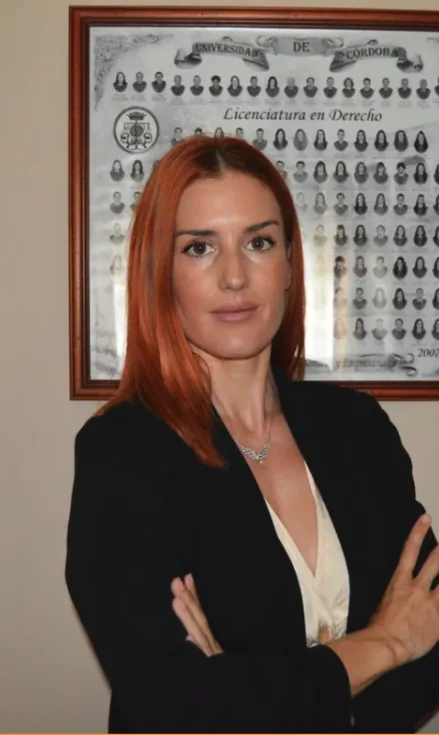
“The conversation I dread is the one where a father tells me, proudly, that he left the United States at nineteen. He is telling me his son may not be American, and he does not know it yet. That test is about years already lived; nothing we file afterwards can add to them. Ask the question in the first trimester, when there is still time to look at it properly.”
— Lola Jurado · Registered lawyer, Ilustre Colegio de Abogados de Málaga (nº 10907)
The short answer
If both parents are US citizens and married to each other, transmission is easy: it is enough that one of them had a residence in the United States at some point before the birth, with no minimum length. If one parent is a US citizen and the parents are married, the American parent must have been physically present in the United States for a total of five years before the birth, at least two of them after turning fourteen. The years need not be continuous, and they are counted before the child’s birth — time you spend in the US afterwards does nothing for that child.
If the test is met, the child is a US citizen from the first second of life, whether or not you ever file anything. If it is not met, no application will fix it. The Consular Report of Birth Abroad is a birth certificate for a citizenship that already exists.
Citizenship is decided at birth, not by the filing
US nationality law for children born abroad turns on the parents’ status and on the American parent’s own history in the United States. Three configurations cover almost every family we see.
Two US citizen parents, married. Under section 301(c) of the Immigration and Nationality Act, the child acquires citizenship at birth provided that one of the parents had a residence in the United States or an outlying possession prior to the birth. There is no duration requirement at all — residence, not a count of years. In practice this is the easy case, and it is the case for most of our founder and remote-worker couples.
One US citizen parent, married to a non-citizen. This is section 301(g), and it is where families get caught. The American parent needs five years of physical presence in the United States before the birth, two of them after age fourteen. Physical presence is literal — days on US soil, added up across a lifetime, not tax residence and not citizenship itself. Certain time abroad still counts: honourable service in the US armed forces, employment by the US government or by a qualifying international organisation, and time abroad as the unmarried dependent child of someone in one of those categories.
Unmarried parents. Section 309 adds requirements where the parents are not married to each other. For a US citizen father there are additional conditions: clear and convincing evidence of the blood relationship, a written agreement to support the child financially until eighteen, and acknowledgement of paternity in writing under oath, legitimation or a court order, all before the child turns eighteen. The historic one-year rule that applied to unwed US citizen mothers was held unconstitutional in Sessions v. Morales-Santana in June 2017; for births from that date, expect the general five-year rule to be applied instead. If you are not married — common enough among our clients, and entirely normal in Spain, where pareja de hecho registration is widespread — this needs looking at specifically, because it is not the same analysis as the married case.
If a fertility clinic was involved, raise it early. For children conceived through assisted reproduction, the State Department looks for a genetic or, for a US citizen mother, gestational connection to a US citizen parent who is also a legal parent at the time and place of birth, and expects clinical records covering the procedure. Note separately that Spanish law does not recognise surrogacy agreements — article 10 of Ley 14/2006 treats them as void — so any plan in that direction is a specialised legal question and not a paperwork question.
Proving your years in the US after a decade abroad
Meeting the test and documenting it are different problems. A consular officer will not take your word for five years; they want a record that covers the specific periods claimed. The evidence families rely on is mundane and slow to obtain: school and university transcripts, US tax returns and IRS wage-and-income transcripts, Social Security earnings statements, employment letters, leases, utility bills, medical records, and old passports with entry and exit stamps.
Two practical points. First, gather it in the second trimester, not after the birth — a university registrar in Ohio does not move faster because you are in Málaga with a newborn, and Social Security earnings statements take time to arrive. Second, the record should be coherent rather than voluminous: a continuous school transcript from ages six to eighteen does more work than a folder of receipts. Where a period is genuinely undocumentable, affidavits can support the file, but they support — they do not replace — the primary records.
If you have kept a US address for banking or tax reasons, be careful not to confuse the two ideas: our note on US mailing addresses after the move deals with correspondence and state tax, which has nothing to do with physical presence. Days on US soil are what counts here.
The eCRBA in Spain: how it actually works
The Consular Report of Birth Abroad, form FS-240, is applied for on form DS-2029, and it can only be requested while the child is under eighteen. In Spain the process now runs through the online eCRBA system: you create a MyTravelGov account, complete and submit the application with the supporting documents uploaded, and then attend an in-person appointment with the child.
The appointments are not all in Madrid. Requests can be made for the Embassy in Madrid, the Consulate General in Barcelona, and the consular agencies serving the rest of the country — including Fuengirola, in Málaga province, as well as Seville, Valencia, Mallorca and Las Palmas. For families living on the Costa del Sol this is the single most useful fact on the page: the appointment is a short drive, not a flight to Madrid.
What is uploaded, in broad terms: the Spanish birth certificate showing both parents’ names, the parents’ evidence of US citizenship, the marriage certificate or evidence of the parents’ relationship status, and the physical-presence evidence discussed above. The fee for the CRBA is $100. After approval, issuance of the document has been running at roughly four to five weeks. Build that into any travel plan — and note that the child cannot travel to the United States without a US passport once they are a US citizen.
For the Spanish birth certificate the consulate wants, ask the Registro Civil for a certificación literal — the full-text version listing both parents — rather than the short extract. It is the same document you will need for several other things, so request more than one copy while you are there.
The first US passport, and the two-parent rule
You can apply for the child’s first US passport at the same appointment as the CRBA, and you should. A first passport for a child under sixteen is applied for on form DS-11, costs $135 in total — a $100 application fee plus a $35 execution fee — and is valid for five years rather than ten.
Both parents must consent. For a first passport for a child under sixteen, both parents or guardians normally appear in person and sign in front of the consular officer. If one parent cannot attend — a common problem when one is travelling for work — the absent parent completes form DS-3053, a notarised statement of consent submitted within ninety days of notarisation, accompanied by a copy of their photo ID. Plan the appointment around this rather than discovering it at the counter.
One rule that surprises new parents: a US citizen must enter and leave the United States on a US passport. Once your child is American, a Spanish or other foreign passport is not an alternative for the first trip home to meet the grandparents. If the child’s other nationality gives them a second passport, they will simply travel on both. Renewals later on follow the ordinary adult process, which we cover on our passport renewal from Spain page.
The Social Security number comes last — and that costs money
Here is the sequencing trap, and it is specific to Spain. The posts serving Spain require the child’s Social Security number application to be submitted separately to the Federal Benefits Unit, after you have received the original CRBA. It is not issued at the appointment and it is not part of the same file. So the realistic chain is: birth → Spanish birth certificate → eCRBA submission → appointment → four to five weeks to issuance → then, and only then, the Social Security application, which has its own processing time.
That matters because the child tax credit requires the child to have a valid Social Security number by the due date of the return, and at least one parent to have one as well. The credit is worth up to $2,200 per qualifying child, of which up to $1,700 can be refundable. There is a further catch for working parents in Spain: if you claim the foreign earned income exclusion on Form 2555, the excluded income does not count as earned income for the refundable portion, so families are often better off using foreign tax credits instead — a decision that belongs with your US preparer and is worth taking deliberately rather than by default.
The blunt version: a baby born in October, with the paperwork started in December, may not have a Social Security number in time for that year’s return. Start the sequence in the week the birth certificate is issued.
And from the first day of life the child is a US taxpayer in principle, filing when their own income crosses the thresholds — which is years away for most families, but becomes real when a Spanish account is opened in the child’s name or a grandparent funds an investment. Our page on US filing obligations from Spain explains the framework that now applies to one more member of the household.
The Spanish side: the Registro Civil
Spanish birth registration is largely handled by the hospital. Under the Civil Registry law, Ley 20/2011, the maternity unit transmits the birth to the corresponding Registro Civil, generally within 72 hours, with the parents signing the declaration form on the ward. If the birth happened outside a healthcare facility, or the hospital route failed for any reason, the parents have ten days to declare it themselves, extendable to thirty where there is justified cause.
Two documents come out of this: the birth entry itself, from which you request the certificación literal, and, for families who hold one, the libro de familia — though the paper family book has been progressively replaced by digital family records. Foreign parents should check that names are recorded as they wish before the entry closes. Spain records both surnames, and the order and spelling of names on a Spanish birth entry will follow your child through every Spanish document afterwards. It is far easier to get right at the hospital than to correct later.
A Spanish birth does not, by itself, make the child Spanish. Spain is fundamentally a jus sanguinis country: nationality passes through parentage, not soil. What the Spanish birth does confer is a shortened path — a child born in Spain to foreign parents can apply for Spanish nationality after one year of legal residence rather than the usual ten, and there are protections against statelessness. We deal with that whole question separately on children born in Spain: nationality and residency, which is the page to read for the nationality analysis.
The child’s own residence authorisation
Until the child holds Spanish nationality, they are a foreign national residing in Spain and they need their own authorisation. It is not automatic and it is not covered by the parents’ cards; the parents apply for it as the child of a legal resident, and the child’s status tracks the parent’s.
The good news is recent. The immigration regulation approved by Royal Decree 1155/2024, in force since May 2025, reorganised authorisations for the minor children of legal residents — both those born in Spain and those who arrive later. Where the old rule produced a short authorisation, typically one year, that had to be renewed repeatedly while re-evidencing means and housing, the current framework provides for a longer authorisation, up to five years, without a visa. For a young family that is one fewer annual appointment for the best part of a school career.
Do not leave it in a drawer. The application should be made promptly after the birth, and the child should also be added to the padrón at the family address, which is what opens the door to the local health centre and later to school enrolment. If your route to Spain was a non-lucrative visa rather than a work route, remember that your own means requirement includes the child — the per-dependant uplift is covered on our proof of income page, and it applies from the renewal that follows the birth.
Living with two nationalities from day one
Most children in this situation grow up American by birth and, in due course, Spanish by the one-year residence route — a combination that works well in practice but has two edges worth knowing about.
The first is the Spanish formality on acquiring nationality. Applicants who are not from the countries with which Spain permits open dual nationality are asked to declare, before the registrar, that they renounce their previous nationality. The United States is not on that list. As a matter of US law that declaration is not one of the acts that expatriates a US citizen — and in practice families in this position generally retain both — but it is a step to walk into with advice rather than to discover on the day. Our page on children born in Spain and the citizenship by residency page set out the mechanics.
The second is that American nationality is not only a benefit. It brings lifelong US tax filing, foreign account reporting once thresholds are crossed, and, eventually, the awkwardness that a Spanish bank may treat the child as a US person for reporting purposes. None of that is a reason to decline it. It is a reason to know it exists, and to plan around it early rather than to meet it at eighteen.
The order of play, at a glance
| Step | When | Watch out for |
|---|---|---|
| Check the transmission test | Before the birth — ideally before conception | The 5 years / 2 after 14 rule if only one parent is American |
| Gather physical-presence evidence | Second trimester | US transcripts and earnings statements are slow from abroad |
| Spanish birth registration | Hospital route, generally within 72 hours | Names and surnames as recorded; ask for the certificación literal |
| eCRBA application + appointment | As soon as the birth certificate is in hand | $100; appointments include Fuengirola (Málaga); under-18 only |
| First US passport (DS-11) | Same appointment as the CRBA | $135; both parents, or DS-3053 notarised consent |
| Social Security number | After the CRBA is issued | Separate filing to the Federal Benefits Unit; tax-credit deadline |
| Child’s residence authorisation | Promptly after the birth | Up to 5 years under RD 1155/2024; not automatic |
| Padrón and health centre | Once the birth entry exists | Gateway to the paediatrician and later to school |
| Spanish nationality option | After 1 year of legal residence | The renunciation declaration before the registrar |
A related point for parents who are no longer together: taking a child who already lives elsewhere to live in Spain is a separate legal question from the child’s status here. See moving to Spain with a child in shared custody.
One consequence of the citizenship you are registering here arrives eighteen years later and surprises most families. A US-citizen son must register with Selective Service between thirty days before and twenty-nine days after his eighteenth birthday even if he has never lived in the United States, and holding Spanish nationality as well makes no difference — the agency publishes an overseas registration form addressed to exactly this situation, using your Spanish home address. It is a five-minute form on the day and impossible to fix after his twenty-sixth birthday: jury duty and Selective Service when you live in Spain.
Frequently asked questions
Is my baby born in Spain automatically a US citizen because I am?
Not automatically. US citizenship passes to a child born abroad only if the transmission conditions are met at the moment of birth. If both parents are US citizens and married to each other, it is enough that one of them had a residence in the United States at some point before the birth, with no minimum duration. If only one parent is a US citizen and the parents are married, that parent must have been physically present in the United States or its outlying possessions for a total of five years before the birth, at least two of them after turning fourteen. If the test is not met, the child is not a US citizen at birth and no later filing can create the citizenship. This is the single most important thing for long-term American residents in Spain to check before, not after, the birth.
What is a Consular Report of Birth Abroad and do I have to get one?
A Consular Report of Birth Abroad, form FS-240, is the State Department document recording that a child born outside the United States acquired US citizenship at birth. It is evidence of a citizenship that already exists rather than a grant of it. It is not compulsory, but it is the practical proof of the child's status for the rest of their life and it can only be applied for while the child is under eighteen. In Spain the application is made online through the eCRBA system with a MyTravelGov account, followed by an in-person appointment. Appointments are available at Madrid and Barcelona and at the consular agencies including Fuengirola in Málaga, Seville, Valencia, Mallorca and Las Palmas.
How do I prove I lived in the United States long enough if I moved to Spain years ago?
With records rather than recollection. School and university transcripts, US tax returns and wage transcripts, Social Security earnings statements, employment records, leases, utility accounts, medical records and passport stamps are all used, and the consular officer is looking for a coherent picture that covers the specific years being claimed. Time spent abroad in honourable US military service, as a US government employee or with a qualifying international organisation, and time spent abroad as the unmarried dependent child of someone in those categories, can count toward the physical presence total. Gather the evidence during the pregnancy. Requesting old transcripts and earnings statements from Spain is slow, and it is far harder once there is a newborn in the house.
When can I get the baby's Social Security number, and why does the order matter?
After the Consular Report of Birth Abroad has been issued, not at the same appointment. The posts in Spain require the Social Security number application to be submitted separately to the Federal Benefits Unit once you hold the original CRBA, so the number arrives at the end of a sequence that already includes an approval wait of several weeks. That order has a cost, because the child tax credit requires the child to have a valid Social Security number issued by the due date of the return, and claiming the foreign earned income exclusion separately blocks the refundable part of that credit. If a birth falls late in the year, start the sequence immediately rather than after the holidays.
Does being born in Spain make my child Spanish, and does the child need a residence card?
Being born on Spanish soil does not by itself make a child Spanish, because Spain transmits nationality primarily through parentage. What a Spanish birth does give is a shortened route: a child born in Spain to foreign parents can apply for Spanish nationality after one year of legal residence instead of the usual ten. In the meantime the child is a foreign national living in Spain and needs their own residence authorisation, which the parents apply for as the child of a legal resident. Under the immigration regulation in force since May 2025 that authorisation can now be granted for up to five years rather than renewed annually, which removed a recurring piece of paperwork for foreign families.
Sources reviewed August 2026: Immigration and Nationality Act sections 301(c), 301(g) and 309 on the acquisition of US citizenship at birth abroad, including the residence requirement where both parents are citizens and the five-year physical presence requirement with two years after age fourteen where one parent is a citizen, and the periods abroad that count toward physical presence; Congressional Research Service report R47223 on US citizenship for children born abroad; Sessions v. Morales-Santana, decided 12 June 2017, on the invalidity of the gender distinction in section 309(c) and the preservation of the general physical presence rule as the remedy; US Department of State material on the Consular Report of Birth Abroad, form DS-2029, form FS-240, the under-eighteen limit, the $100 fee and the assisted reproductive technology requirements; US Embassy and Consulate in Spain guidance on the eCRBA application through MyTravelGov, the availability of appointments at Madrid, Barcelona, Fuengirola (Málaga), Las Palmas, Mallorca, Seville and Valencia, the approximate four to five week issuance time, and the requirement that Social Security card applications be submitted separately to the Federal Benefits Unit after the original CRBA is received; US Department of State passport guidance on form DS-11 for children under sixteen, the $100 application and $35 execution fees, five-year validity, and form DS-3053 notarised statement of consent valid ninety days; IRS material on the child tax credit of up to $2,200 with up to $1,700 refundable, the Social Security number requirement and the interaction between the foreign earned income exclusion on Form 2555 and the refundable portion; Ley 20/2011 del Registro Civil, articles 46 and 47, on hospital communication of births within 72 hours and the ten-day and thirty-day declaration periods; Real Decreto 1155/2024, the Reglamento de Extranjería in force since May 2025, on residence authorisations for the minor children of legal residents; Código Civil articles 17, 22 and 23 on nationality, the one-year residence route for those born in Spain and the declaration on acquisition; and Ley 14/2006, article 10, on the nullity of surrogacy agreements in Spain. General information only, not legal, tax or immigration advice. Fees, processing times, appointment availability and consular procedure change frequently and must be confirmed against current official guidance before you rely on them.