
Most retirees arrive in Spain with their affairs in reasonable order at home: a will, perhaps a trust, a durable power of attorney, and — if they were thorough — a living will and a healthcare proxy naming the person who should make medical decisions if they cannot. It is a natural assumption that those medical documents travel with you. They do not, at least not usefully. A US advance directive is a perfectly valid document, but when you are unconscious in an emergency department in Málaga or Alicante, the doctors treating you work from Spain's own system: a registered Spanish advance directive that appears in their records. A directive sitting in a drawer in Florida, written in English and in a format they have never seen, is of little help. The good news is that the Spanish equivalent is straightforward to make, it is generally free, and it slots neatly alongside the other documents a resident retiree should have. This page walks through what the Spanish directive is, how the registry makes it work, how you actually sign one, and how it differs from your power of attorney and your will. It is general information about the process, not medical or legal advice on your situation.
On this page
Why your US living will may not travel What the Spanish directive actually is Why the registry is the whole point How you actually make one Andalucía: the voluntad vital anticipada How it differs from your POA and your will The limits — and where euthanasia fits Where it fits in your first year Common mistakes we correct Frequently asked questions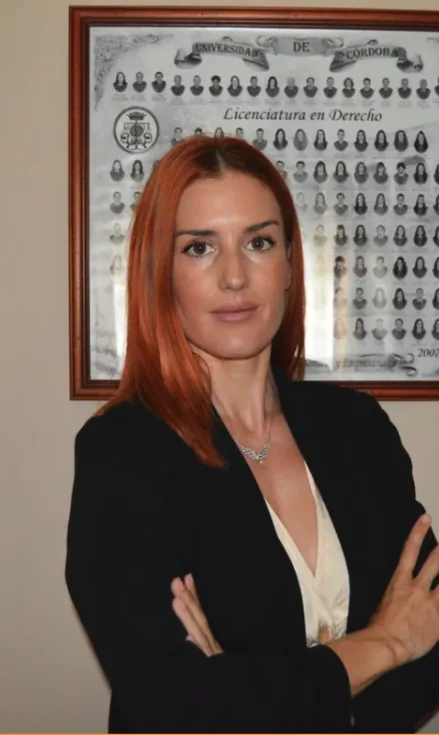
"People plan the visa and the will carefully and forget the one document that speaks for them while they are still alive but cannot talk. A US living will is not wrong — it simply is not in the Spanish system a doctor here reaches for. Signing the Spanish directive and registering it takes an afternoon, and it means your family in the United States are not arguing with a hospital about a paper nobody can read. Do it once you have your health cover and your padrón sorted, and name someone you trust to be your voice."
— Lola Jurado · Registered lawyer, Ilustre Colegio de Abogados de Málaga (nº 10907)
Why your US living will may not travel
The problem is not that Spain refuses to respect advance wishes — it respects them a great deal — but that it does so through a specific channel. When a Spanish hospital needs to know whether a patient who cannot communicate has left instructions, it consults the register of advance directives, not a folder of foreign paperwork. Your US living will is invisible to that check. Even if a relative produces it, three things work against it: it is not in Spanish, so it would need a sworn translation before anyone could rely on it; it is written to a US legal template that a Spanish clinician has no duty or training to interpret; and it is not registered, so in the compressed time of an emergency it has no standing in the system the medical team actually uses. Guidance for expats is blunt about this: a directive that is entirely valid in the United States can be completely ignored in Spain.
That does not make your US document worthless — it remains relevant if you are ever treated back in the States, and it can be evidence of your considered wishes — but it should not be your plan for Spain. The reliable plan is to make the Spanish version, in Spanish, and register it here. It is worth stressing that this is a different question from who manages your money and legal affairs if you lose capacity; that is the job of a poder preventivo, covered in its own guide. The advance directive is specifically about your body and your medical treatment.
What the Spanish directive actually is
The formal name is the documento de instrucciones previas, created by Article 11 of Ley 41/2002, Spain's patient-autonomy law. Depending on the region you will also hear it called the declaración de voluntad vital anticipada or, colloquially, the testamento vital — the "living will" — but they are the same instrument. In it, an adult of sound mind, acting freely, sets down in writing how they wish to be cared for and treated in the event that they later cannot express that wish for themselves. It does three main things.
First, it lets you state which treatments you would accept or refuse in defined situations — for example whether you would want life-sustaining measures continued in an irreversible condition. Second, it lets you appoint a representative (representante) who acts as your interlocutor with the medical team, making sure your directive is honoured and speaking for you on questions the document does not spell out; this is the closest Spanish equivalent to a US healthcare proxy or agent. Third, it can record wishes about organ donation and, after death, about the destination of your body. Crucially, the directive operates only while you are alive and unable to decide — the moment you can express your own will again, it steps aside, and it never touches your estate. That is what distinguishes it from a Spanish will, which deals only with what happens after death.
Why the registry is the whole point
A signed directive that no doctor can find is not much use, and Spain's answer is a two-tier register. Each autonomous community keeps its own registry of advance directives, and these feed the national Registro Nacional de Instrucciones Previas (RNIP), run by the Ministry of Health, which connects the regional registers so that a directive made in Andalucía can be consulted by a hospital in Valencia or the Basque Country. When treating physicians need to check, they query this system — and a registered directive is right there, attached to your health record, rather than depending on a relative arriving with the correct piece of paper.
This is why registration, not just signing, is the step that matters. An advance directive that exists only on paper at home is legally real but practically fragile; the same document lodged in the registry becomes visible to the clinicians who need it, when they need it. Once it is registered you can, if you wish, consult your own entry online through the RNIP using an electronic certificate, DNI/NIE electronic ID or the Cl@ve system — the same digital identity you will have set up for other Spanish admin. You can also revoke or update the directive at any time while you have capacity, and it is sensible to review it after any major change in your health or your wishes.
How you actually make one
The patient-autonomy law sets the principle and leaves the formalities to each autonomous community, so the exact method depends on where you are registered as resident. Across the regions there are generally three accepted ways to formalise the document. You can sign it before a notary, which some people prefer for the formality and for keeping it alongside other notarial documents. You can sign it before witnesses — typically several adults who are independent of you and of any benefit under the directive. Or you can make it before the health administration, at a registration point staffed by officials trained to guide you through the content and lodge it in the regional registry on the spot. Several regions now also allow electronic submission for those with a digital certificate.
Whichever route you use, the substance is the same: you must be an adult of sound mind acting voluntarily, the directive must be in writing and in Spanish, and it is worth preparing the content thoughtfully — many regional health services publish a model form and a plain-language guide to help you think through the decisions. Naming a representative is optional but strongly advisable: a trusted person on the ground in Spain who can speak to doctors is exactly what a family scattered across US time zones cannot easily do. Because the directive will guide real medical decisions, a short conversation with your Spanish doctor or a lawyer about how to word it is time well spent.
Andalucía: the voluntad vital anticipada
For the many US retirees who settle on the Costa del Sol and elsewhere in the south, the relevant instrument is the Declaración de Voluntad Vital Anticipada of Andalucía, held in the regional Registro de Voluntades Vitales Anticipadas run by the Junta de Andalucía's health service. Andalucía has deliberately made the process accessible: you do not need a notary. The declaration is handled in a decentralised way, through registration points located in hospitals, health centres and other SAS facilities across every province, where trained staff help you complete and lodge the document. If you cannot sign it yourself, a witness may sign on your behalf with proper identification.
Appointments are arranged through Salud Responde, the regional health line, on 955 545 060, and the Junta publishes the model forms, a guide to making the declaration, and the list of registration points province by province. Registration in Andalucía flows through to the national RNIP in the usual way, so a directive made in Fuengirola or Marbella is available to hospitals elsewhere in Spain. If you live in a different community — Valencia, Catalonia, Madrid, the Canaries — the equivalent regional registry applies, and the practical steps are similar even where the accepted formalities differ slightly.
How it differs from your POA and your will
Retirees often blur three separate documents that answer three separate questions, and it helps to keep them apart. The advance directive answers "what medical treatment do I want, and who speaks to my doctors, if I cannot decide?" The poder preventivo — a Spanish enduring power of attorney — answers "who manages my money, property and legal affairs if I lose capacity?" And the Spanish will answers "what happens to my estate after I die?" They operate at different moments and through different systems: the directive through the health registry while you live, the poder before a notary while you live, the will through inheritance law after death. A complete plan for a resident retiree usually has all three. Your US healthcare proxy and US living will map onto the Spanish advance directive; a US durable POA maps onto the poder preventivo; a US will interacts with Spanish inheritance rules and is best paired with a Spanish will.
| Question | US tool you may already have | Spanish equivalent | When it operates |
|---|---|---|---|
| What treatment do I want if I can't decide? | Living will | Voluntad vital anticipada / instrucciones previas | While alive, without capacity |
| Who speaks to my doctors for me? | Healthcare proxy / agent | Representative (representante) named in the directive | While alive, without capacity |
| Who manages my money and legal affairs? | Durable power of attorney | Poder preventivo (before a notary) | While alive, without capacity |
| Who inherits my estate? | Will / trust | Spanish will (testamento) | After death |
| Where does it live so it can be used? | A drawer / attorney's file | Regional registry → national RNIP | Consulted by treating hospital |
| Does the US version work here on its own? | — | Not reliably; make the Spanish one | — |
The limits — and where euthanasia fits
An advance directive is powerful but not unlimited. By law it cannot require anything contrary to the legal order or to good medical practice (the lex artis), and it will not be applied to circumstances it plainly did not foresee. That is why naming a representative matters: real situations rarely match the wording exactly, and a trusted human voice fills the gap the document cannot.
People sometimes assume the directive is where they can request assisted dying. It is not that simple. Spain does permit euthanasia under Ley Orgánica 3/2021, but that is a separate, tightly regulated medical process with its own eligibility criteria, repeated requests, independent review and safeguards — not something you simply write into an advance directive and consider settled. What a registered directive can do is ensure that your previously expressed wishes are on record and taken into account if you later cannot communicate them. Because this is a sensitive and heavily regulated area, and because the interaction between a directive and that procedure is genuinely technical, it is one to discuss properly with a lawyer and your medical team rather than to improvise. The dedicated map is our guide to euthanasia and assisted dying in Spain for US retirees; our guide to organ donation in Spain explains the separate donor-wishes layer, and our guides to long-term care and to what happens when a US retiree dies in Spain cover the neighbouring ground.
Where it fits in your first year
There is no rush to sign an advance directive on your first week in Spain, but it belongs on the list once the essentials are in place. A sensible order is to sort your first-90-days basics — NIE and TIE, empadronamiento, a bank account and your health cover — and then, once you have a Spanish doctor and know your region, put the medical and legal documents in place together: the advance directive through the health registry, the poder preventivo and the Spanish will before a notary. Doing them as a set means you are not paying two separate visits, and it lets a lawyer make sure the documents are consistent with each other and with whatever you still have in the United States.
It is also worth telling your family what you have done and where it is registered. The whole point of the directive is to spare the people who love you from guessing — or arguing with a hospital — in a crisis, and that only works if they know it exists and who you named as your representative.
Common mistakes we correct
The first and most common mistake is relying on the US living will and never making a Spanish one, on the assumption that a valid directive is valid everywhere. The second is signing but not registering — a directive left at home rather than lodged in the regional registry loses most of its practical value. The third is naming no representative, or naming someone who lives in the United States and cannot realistically speak to a Spanish medical team in real time. The fourth is writing it only in English; the Spanish document must be in Spanish, and a lawyer or the registration staff can help you express your wishes accurately. The fifth is treating the directive as a substitute for a power of attorney or a will — it is neither, and a plan that has only one of the three leaves real gaps. None of these is hard to avoid; they simply need to be done deliberately rather than assumed.
Frequently asked questions
Is my US living will or healthcare proxy valid in Spain?
Not automatically. A US advance directive is a valid document, but a Spanish hospital works from Spain's own registered system. A foreign directive is not in that registry, is in English rather than Spanish, and may use a format Spanish clinicians do not recognise, so in an emergency it can be set aside. If you want your wishes followed here, make a Spanish advance directive rather than rely on the US one.
What is a voluntad vital anticipada?
It is Spain's advance healthcare directive — the documento de instrucciones previas under Article 11 of Ley 41/2002, called declaración de voluntad vital anticipada or testamento vital in different regions. An adult of sound mind sets out which treatments they want or refuse if they can no longer decide, may appoint a representative to speak with doctors, and can record organ or body wishes. It operates only while you are alive and unable to express your will, unlike a will, which deals with your estate after death.
How do I register an advance directive in Spain?
You lodge it in your autonomous community's registry of advance directives, which feeds the national Registro Nacional de Instrucciones Previas (RNIP) so doctors anywhere in Spain can consult it. Depending on the region you formalise the directive before a notary, before witnesses, or at a health-service registration point, and some regions allow electronic submission. Registration is the crucial step — an unregistered directive is much harder for a hospital to find and apply.
Do I need a notary to make one?
Not everywhere — the formalities are set region by region. In Andalucía you do not need a notary: you can make the declaración de voluntad vital anticipada before witnesses or at a health-service registration point, with trained staff to help, and appointments are booked through Salud Responde. Other communities offer notarial, witness and administrative routes in different combinations, so the method depends on where you are registered as resident.
Does an advance directive let me choose euthanasia in Spain?
They are separate. Spain's euthanasia law (Ley Orgánica 3/2021) has its own strict, medically supervised procedure with specific eligibility and safeguards — not simply a box in an advance directive. A registered directive can, however, help ensure your previously expressed wishes are taken into account if you can no longer communicate them. Given how sensitive and regulated this is, take proper legal and medical advice rather than assuming a directive alone decides it.
General information, not legal or medical advice. Advance-directive rules are set by Spain's patient-autonomy law (Ley 41/2002) and by each autonomous community, and the euthanasia procedure by Ley Orgánica 3/2021; formalities, registration points and forms vary by region and change over time, and they are applied to individual circumstances. Confirm the current procedure with your regional health service and take legal and medical advice on how an advance directive interacts with your other documents and your residence before acting. Sources reviewed July 2026 include the Ministry of Health's Registro Nacional de Instrucciones Previas (RNIP), Article 11 of Ley 41/2002 on advance directives and the appointment of a representative, the Junta de Andalucía's Registro de Voluntades Vitales Anticipadas and Salud Responde guidance (tel. 955 545 060), and expat guidance on the limited recognition of foreign living wills in Spanish hospitals.