
Almost every American planning a move to Spain on the digital nomad visa hits the same question at the same moment: do I keep paying into US Social Security, or do I have to start contributing to the Spanish system? It feels like a detail, but it is not — it changes your monthly cost, your paperwork, and sometimes whether a particular structure works at all. The answer is governed by the US–Spain Social Security agreement, in force since 1 April 1988, and by one rule inside it that most summaries skip over: employees and the self-employed are treated on completely different footings. Get that distinction right and the social security side of your file becomes predictable. Get it wrong — by assuming a certificate of coverage will cover you when it cannot — and you can arrive expecting one cost and meet another. This guide explains the rule, the 2026 update that changed things for W-2 employees, and the trap hidden in the phrase "we'll just switch you to a contractor."
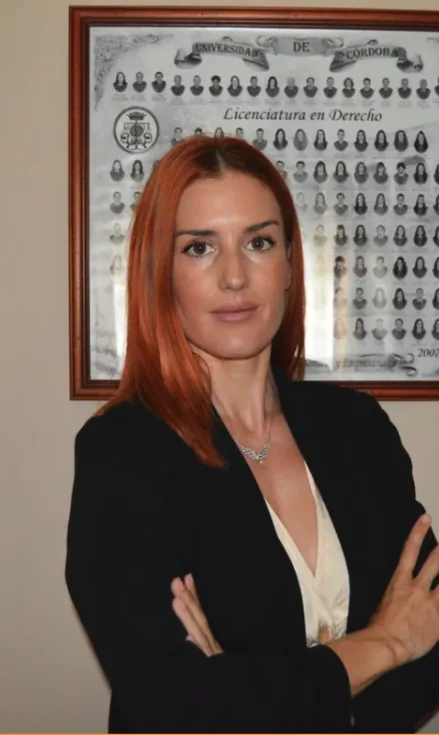
"The first thing I ask a remote worker is not how much they earn — it is whether they are an employee or a freelancer. That single fact decides whether a US certificate of coverage can help them, or whether they will be paying Spanish autónomo contributions from month one."
— Lola Jurado · Immigration lawyer, Ilustre Colegio de Abogados de Málaga (nº 10907)
On this page
Two social security systems, one worker The rule that decides it: employee vs self-employed W-2 employees: the certificate of coverage (2026 update) Freelancers and 1099 contractors: why the certificate rarely helps The "we'll switch you to a 1099" trap Employee vs freelancer at a glance How a certificate of coverage is actually obtained Coverage is not healthcare At renewal and over the longer term Frequently asked questionsTwo social security systems, one worker
When you live in Spain and work remotely for a US company or US clients, two national systems could, in theory, both claim you. The United States would like its rules to keep applying because you work for an American payer; Spain applies its own rules to people who live and work on its territory. Left unresolved, that overlap could mean contributing to both systems for the same work — the exact problem the totalization agreement exists to prevent. The agreement's job is to make sure that for any given period of work, you contribute to one system, not two, and it sets out which one. The digital nomad visa itself does not decide this; the visa is your immigration status, while the agreement decides your social security status. They run on parallel tracks and you have to satisfy both.
Spanish law makes this a live requirement, not an afterthought. The digital nomad framework (Ley 14/2013, as reformed) expects applicants to show they are square with social security obligations — either by evidencing continued coverage abroad under an agreement, or by committing to register in Spain. So the question is not whether to deal with social security, but on which side of the line you fall. For the broader picture of how registration works in Spain, see our guide on social security in Spain for expats.
The rule that decides it: employee vs self-employed
Here is the sentence that does the work. Under the totalization agreement, the rules for employees and for the self-employed are different:
For an employee, the starting point is coverage where the work is physically performed, but a detached-worker exception lets a worker sent by a US employer to work temporarily in Spain stay in the US system — commonly for up to five years — instead of switching to Spanish coverage. That continued US coverage is what a certificate of coverage proves.
For a self-employed person, the rule is blunt: someone who would otherwise be covered by both countries is subject to the laws of only the country in which they reside. A freelancer who moves to Spain and lives there is resident in Spain. The agreement therefore points to Spanish coverage, and a US certificate of coverage generally will not exempt them. This is the single most misunderstood point in the whole area, because the visa is marketed to "remote workers and freelancers" as one group, while social security splits them straight down the middle.
W-2 employees: the certificate of coverage (2026 update)
If you are a genuine W-2 employee of a US company that is keeping you on its payroll while you work remotely from Spain, you are on the more favourable side of the line. Where the detached-worker rule applies, your employer's arrangement can keep you in US Social Security, and the US Social Security Administration issues a certificate of coverage confirming it. For the period the certificate covers, you are exempt from compulsory Spanish contributions — you are not paying twice, and you are not registering as autónomo.
Through 2025 there was real friction here, because it was not always clear that Spanish authorities would accept a US certificate of coverage for a remote employee who had not been formally "posted" in the traditional sense. The practical picture improved at the start of 2026: Spain moved to accept US W-2 certificates of coverage for digital nomad visa applicants where the certificate genuinely reflects the working arrangement. That removed a common sticking point for Americans who work for a US employer and simply want to do the same job from Spain. Two cautions remain, though. First, the certificate has to describe remote work performed from Spain, not a vague international assignment, or it may not fit your facts. Second, not every US employer will cooperate — some decline to issue the authorisation letters or take on the arrangement for their own compliance and insurance reasons, and no amount of Spanish acceptance helps if the US side will not produce the paperwork.
Freelancers and 1099 contractors: why the certificate rarely helps
If you are self-employed — a 1099 contractor, a sole proprietor, or a freelancer invoicing clients — the residence rule usually lands you in the Spanish system. Because you reside in Spain, the agreement assigns your social security to Spain, and the standard route is to register as autónomo and contribute to the Spanish Special Regime for self-employed workers (RETA). This is not a penalty and it is not optional pain; it is simply where the agreement places you, and for many freelancers it is a workable and even sensible outcome, since it plugs you into the Spanish system for the years you are building residence here.
What it does mean is that the monthly cost picture is different from the employee's. Spanish autónomo contributions are set against your declared activity income, and new registrants can usually access a reduced tarifa plana (flat rate) in the first year before contributions rise, with the exact figures set by the current regulations and confirmed for your case. The practical mistake to avoid is budgeting as if a US certificate of coverage will spare you these contributions when, for a resident freelancer, it generally will not. If your file will run through autónomo status, our guide on registering as autónomo for social security and the walk-through on setting up as an autónomo freelancer in Spain explain what registration involves.
The "we'll switch you to a 1099" trap
A pattern comes up constantly. A US employer is unwilling to keep an employee on a foreign-resident payroll, so the suggestion is: "Let's just convert you to a 1099 contractor and you invoice us." On the immigration side this can look like a fix, because the digital nomad visa does accept freelancers. But watch what it does to social security. As an employee, you were potentially eligible to keep US coverage through a certificate of coverage. The moment you become a self-employed contractor resident in Spain, the residence rule takes over and you generally move into Spanish autónomo contributions. The same switch can also reshape your tax position, because employee status is one of the gateways into the Beckham special regime, which is not designed for ordinary self-employment.
None of this makes the switch wrong — sometimes it is the only way the arrangement works, and autónomo status is perfectly fine. The point is to make the change with your eyes open, weighing the immigration, social security and tax consequences together rather than treating "employee or contractor" as a purely administrative label. It is one of the clearest examples on the whole visa of a decision that looks like paperwork but is really strategy. Our guide comparing the digital nomad visa, taxes and the Beckham regime shows how the tax side moves when the employment side moves.
Employee vs freelancer at a glance
The table below sets the two profiles side by side on the points that actually differ. It is a general orientation, not a determination of your case — the applicable rule depends on your exact facts and must be confirmed.
| Point | W-2 employee of a US company | Self-employed / 1099 freelancer |
|---|---|---|
| Rule that applies | Detached-worker exception | Coverage by country of residence |
| Can a US certificate of coverage help? | Yes, where it applies (Spain accepts W-2 certificates from 2026) | Generally no — resident in Spain |
| Default Spanish outcome | Exempt for the covered period | Register as autónomo (RETA) |
| Who must act | US employer requests the certificate | You register in Spain |
| Time limit | Detached-worker rule is time-limited (commonly up to 5 years) | Ongoing while resident and active |
| Common failure point | Employer won't cooperate; certificate doesn't fit the facts | Assuming a certificate will exempt you when it won't |
How a certificate of coverage is actually obtained
Where the employee route fits, the certificate is requested from the US Social Security Administration, not from Spain — it is the US side that certifies you remain in its system. The request is made by the employer or the worker, and the certificate then serves as the proof you (or your Spanish adviser) present to show the worker is exempt from Spanish compulsory coverage for the stated period. The document should name the worker, state the period, and reflect that the work is remote work from Spain. Timing matters: it is far easier to have the certificate arranged around the time the arrangement begins than to reconstruct it later, so it belongs on the pre-application checklist alongside your income evidence and health insurance rather than as a loose end. For how the rest of the file fits together, see our guide to the digital nomad visa requirements and income thresholds.
Coverage is not healthcare
One clarification saves a lot of confusion: a certificate of coverage settles which country's Social Security contributions you pay. It does not automatically give you access to Spanish public healthcare, and it is not a substitute for the visa's insurance requirement. The digital nomad visa separately requires full health cover in Spain — public or private — equivalent to the Spanish National Health System, with no gaps, co-payments or waiting periods that would leave you effectively uninsured. So an employee holding a US certificate of coverage still needs a compliant Spanish health policy for the periods that certificate does not cover them, and a freelancer registering as autónomo will build Spanish healthcare entitlement through their contributions but should confirm the timing. Treat social security and health insurance as two separate boxes that both have to be ticked.
At renewal and over the longer term
Nothing here is permanent. The detached-worker rule that keeps an employee in the US system is time-limited — commonly framed as up to five years — and the digital nomad authorisation is itself renewed rather than granted once. Each renewal re-tests your circumstances: are you still working remotely for companies abroad, is your income above the threshold, and does your social security position still hold. As your life in Spain becomes more settled and long-term, the analysis can drift toward Spanish coverage even for someone who began on a US certificate. The sensible discipline is to revisit the question at each renewal, not to assume the first year's answer runs forever. For how continuity is assessed as the years accumulate toward residency, see our guides on renewing the digital nomad visa and the path from the digital nomad visa to permanent residency.
Frequently asked questions
Can I stay on US Social Security while living in Spain on the digital nomad visa?
Sometimes. The US–Spain totalization agreement lets a US employee sent to work temporarily in Spain remain in US Social Security, evidenced by a US certificate of coverage, so no Spanish contributions are due for that period. As of early 2026 Spain also accepts a US certificate of coverage for W-2 remote employees on the digital nomad visa where it genuinely applies. A self-employed person, however, is covered by the country of residence, so a freelancer living in Spain generally cannot rely on it.
What is a certificate of coverage?
It is a document issued by the US Social Security Administration confirming that a worker remains covered by, and pays into, the US system. Under the totalization agreement it serves as proof that the worker is exempt from compulsory coverage in Spain for the period it covers. Without an applicable certificate, Spanish Social Security registration is the default.
Why can't a 1099 freelancer use a certificate of coverage on the digital nomad visa?
Because the totalization agreement assigns self-employed people to the Social Security system of the country where they reside. A freelancer who lives in Spain is resident in Spain, so the agreement generally points to Spanish coverage rather than US coverage. In practice that usually means registering as autónomo and contributing to the Spanish system.
If my US employer switches me to a 1099 contractor for the visa, what happens to my Social Security?
Changing from W-2 employee to 1099 contractor can change the answer. As an employee you may qualify to keep US coverage through a certificate of coverage; as a self-employed contractor resident in Spain you generally fall under Spanish Social Security and would register as autónomo. The immigration and the social security consequences of that switch need to be weighed together before you agree to it.
Does paying US Social Security also cover my Spanish healthcare?
No. A certificate of coverage only settles which country's Social Security contributions you pay; it does not by itself give you access to Spanish public healthcare. The digital nomad visa separately requires full private or public health insurance in Spain equivalent to the national health system for the periods you are not covered by it.
Is US Social Security coverage permanent while I live in Spain?
No. The detached-worker rule that keeps an employee in the US system is time-limited, commonly up to five years, and renewal of the visa re-tests your circumstances. As residence in Spain becomes more permanent, the analysis can shift toward Spanish coverage, so it should be reviewed at each renewal rather than assumed to continue.