
One of the most attractive features of Spain's digital nomad visa is that it was designed for households, not just individuals. The main applicant — a remote employee or freelancer working for clients based outside Spain — can bring a spouse or registered partner and dependent children, so the whole family relocates on a single, coordinated immigration route rather than scrambling for separate permits. This guide explains who qualifies, the extra income you'll need to evidence, the documents involved, and the day-to-day questions families ask most: schooling, healthcare and whether a spouse can work.
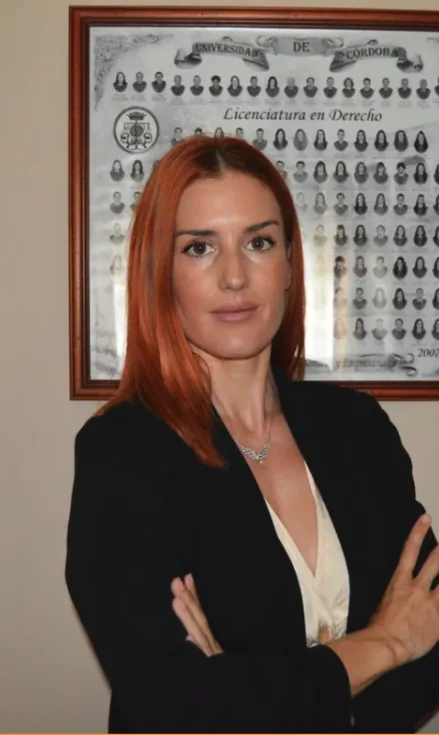
"Bringing your spouse and children on the digital nomad visa is very achievable — the key is proving the family relationships and the means to support everyone cleanly, whether they travel with you or join later. Plan the family side from the beginning and no one is left waiting at a consulate."
— Lola Jurado · Immigration lawyer, Ilustre Colegio de Abogados de Málaga (nº 10907)
Which family members can come
The digital nomad visa allows the main applicant to be accompanied — or later joined — by close family. In practice this means a spouse or registered/de facto partner, dependent children (typically minors, and adult children who remain genuinely dependent, for example because they are studying or unable to support themselves), and, in some cases, dependent ascendants (parents) where genuine dependency can be shown. The unifying test is dependency and a genuine family relationship: the authorities want to see that the people joining you form part of your household, not simply people you'd like to sponsor. Because the boundaries of "dependency" — especially for adult children and parents — can turn on the specific facts, this is one area where it pays to review your family's situation before filing.
Applying together or joining later
There are two ways to bring your family. The first is to include them in the same application as the main applicant, so everyone's residence is processed at once and the household relocates together. This is usually the smoothest path when you already know who is coming and you have their civil documents ready. The second is family reunification later: the main applicant establishes residence first, then brings family members across once settled. This can suit people who need to move quickly for work and organise the family's move in a second stage, or whose personal circumstances change after arrival.
Each route has trade-offs. Processing everyone together avoids a second procedure and gets the family onto aligned residence periods from the outset. Joining later gives flexibility but means a further application, additional evidence that you can support the arriving relatives, and a gap during which the family is apart. There is no single right answer — the better route depends on your timing, your documents and your household. For the mechanics of bringing relatives across in a later stage, see our overview of family reunification in Spain.
The extra income you'll need to evidence
Every family member you add raises the financial threshold you must demonstrate. The main applicant's own requirement is set as a multiple of Spain's SMI (the national minimum wage), and on top of that you must evidence an additional percentage of the SMI for each accompanying relative. As a widely-cited working reference, the uplift has commonly been in the region of around 75% of the SMI for the first family member and roughly 25% of the SMI for each additional person after that — so a couple with two children would need to show the main applicant's threshold plus these cumulative additions.
Just as with the main applicant, what matters is not only the amount but how you evidence it. Consulates and the immigration authority look for income that is stable and recurring across the household — a consistent history of payslips, invoices, contracts and bank statements is far more persuasive than a single strong month. The additional income for family members generally comes from the main applicant's own earnings, so building a clean, well-documented picture of that income is central to getting the whole family approved together. For the underlying numbers behind the base threshold, see our note on income requirements for 2026.
Documents for family members
Bringing family means adding a layer of civil documentation to prove the relationships you're relying on. In broad terms you should expect to provide:
- Marriage certificate for a spouse, or evidence of a registered/de facto partnership, apostilled and sworn-translated into Spanish.
- Birth certificates for each child, apostilled and sworn-translated, showing the parental relationship.
- Evidence of dependency where relevant — for adult children or parents, documentation showing they genuinely depend on the main applicant.
- Clean criminal-record certificates for adult family members, apostilled and translated.
- Private health insurance covering each family member in Spain (or the appropriate public-cover arrangement).
- Copies of passports and the usual application forms and photographs for each person.
Children: schooling in Spain
For families with children, education is usually the first practical question, and Spain is well set up for it. Once resident, children can access public schooling in Spain, and families also have a wide choice of private and international schools — the latter concentrated in cities and coastal areas popular with international residents, offering British, American, French, German and International Baccalaureate curricula. Public schools are free and teach in Spanish (and in some regions a co-official language), which younger children tend to absorb quickly; international schools cost more but ease the transition for older children or those planning to return to an English-language system. Places at popular international schools can be limited, so if that route matters to you it's worth researching admissions timelines alongside your visa, not after arrival.
Family healthcare
Health cover is both an application requirement and a genuine benefit of moving. For the visa itself, every family member generally needs full private health insurance valid in Spain, with no co-payments and no exclusion for pre-existing conditions in the way the authorities require — this is checked for each person, not just the main applicant. Once settled, families often value Spain's healthcare highly: the public system is well regarded, and many remote-working families keep comprehensive private cover for convenience and English-speaking care while also being within reach of the public system depending on their circumstances. Making sure each family member's policy meets the specific requirements is a common source of last-minute problems, so it's worth confirming the wording before you submit.
Can family members work?
A frequent and important question is whether a spouse or partner can take a job in Spain. A key attraction of the digital nomad route is that accompanying family members are generally authorised to work and to reside in Spain — meaning a spouse or partner can typically take up employment or self-employment locally, and is not confined to the remote-for-foreign-clients rule that defines the main applicant's own status. This is a meaningful difference from some other residence routes, and it makes the digital nomad visa attractive to dual-career couples. That said, the precise scope of a family member's work authorisation should be confirmed for your specific case, because the way a relative's permission is framed can affect what they may do and when.
Why the household should be planned as one file
The recurring theme in family applications is that the pieces interlock. The income you evidence has to cover everyone; the documents have to prove each relationship; the health policies have to satisfy the requirement for every person; and the choice between applying together or reuniting later shapes the whole timeline. Treating each family member as a separate afterthought is where households run into trouble — a missing apostille for one child, or a health policy that covers the main applicant but not the spouse, can hold up the entire family. Planning the household as a single, coherent file from the start is what keeps everyone moving together.
It also connects directly to the underlying visa and to tax. If the main applicant is weighing the Beckham election alongside the family's move, the sequencing of the visa, the reunification and the tax registration all interact — the same discipline we bring to the route itself in our digital nomad visa guide. When you're ready to look at your own household, you can get in touch and we'll map the right sequence for you.
Common mistakes families make
- Under-estimating the extra income needed once every relative is counted.
- Leaving apostilles and sworn translations of marriage and birth certificates too late.
- Buying health policies that don't meet the specific wording required for each family member.
- Assuming an adult child or parent automatically qualifies without evidencing genuine dependency.
- Not deciding early whether to apply together or reunite later, then losing time to a second procedure.
Frequently asked questions
Can I bring my spouse and children on the digital nomad visa?
Yes. A spouse or registered partner and dependent children can generally accompany the main applicant or join later, provided the relationship and the additional income are evidenced. We confirm the current thresholds for your household.
How much extra income do I need per family member?
An additional percentage of Spain's SMI for each relative — commonly around 75% for the first family member and roughly 25% for each additional person, as a working reference. The exact figures change with the SMI and must be confirmed for your application year.
Can my spouse work in Spain?
Accompanying family members are generally authorised to work and reside, so a spouse can typically take local employment or self-employment. The precise scope should be confirmed for your specific case.
Do we have to apply all at once?
No. You can include family in the same application so everyone is processed together, or the main applicant can establish residence first and bring family through reunification later. The right choice depends on your timing and documents.
This page is general information, not legal advice. Family eligibility, income thresholds and document requirements depend on your specific circumstances and change over time. We confirm the current position for your household before you file.