Seville is the kind of place people fall for slowly and then completely. It is the cultural capital of Andalusia and, in many ways, the beating heart of the Spain that lives in the imagination — flamenco born in its own barrios, tapas eaten standing at a marble counter, a cathedral and a Moorish palace at its centre, and streets scented with orange blossom in spring. Expats who thrive here tend to want exactly that authenticity: not a resort or an international bubble, but a real Spanish city that asks you to live at its pace and rewards you with a life that feels richer, warmer and considerably more affordable. This guide walks you through why people move, where they settle, what it costs in broad terms, which immigration route usually fits, and the first legal steps once you land.
On this page
Why expats choose Seville The best neighbourhoods — and who each suits Cost of living, honestly Which visa or route fits a Seville move Healthcare: public and private International schools Getting around Lifestyle and festivals Your first practical steps Frequently asked questions
"Seville rewards people who want the real, unhurried Spain rather than an expat bubble — and living at that pace is a joy once your paperwork is genuinely in order. Sort the visa and the NIE, the padrón and the residence card in the right sequence, and you are free to give yourself over to the city instead of the queues."
— Lola Jurado · Immigration lawyer, Ilustre Colegio de Abogados de Málaga (nº 10907)
Why expats choose Seville
The first thing to understand about Seville is that it is unmistakably Andalusian to its core. This is the region's capital and its cultural engine — the place where flamenco is not a show put on for visitors but a living tradition woven into ordinary neighbourhoods, where the bullring and the cathedral and the Real Alcázar sit within a short walk of one another, and where centuries of Roman, Moorish and Christian history layer into an old town that is one of the largest in Europe. For people who want to feel that they have genuinely moved to Spain, rather than to an internationalised version of it, few cities deliver so completely.
What draws many expats above all is the lifestyle and the sense of ease. Seville runs on a sociable, outdoor, human clock. Life happens on terraces and in plazas, over long lunches and later dinners, in the daily ritual of stepping out for a caña and a plate of something small. The tapas culture here is not a trend but the ordinary way people eat and meet, and newcomers are often struck by how quickly the city folds them into its rhythms — how easy it is to become a regular at a corner bar and, before long, to be greeted by name.
Seville has no beach — and it is worth being honest about that, because it is one of the features newcomers weigh most carefully. It is an inland city, set on the banks of the Guadalquivir, the great navigable river that once made Seville the gateway to the Americas and still shapes daily life, with runners, rowers and strollers lining its banks and the Triana quarter facing the historic centre across the water. The climate is the other honest trade-off: winters are gloriously mild and often sunny, making the cooler months a delight, but the summers are genuinely hot — Seville is one of the warmest cities in Europe, and July and August ask you to adapt, resting in the afternoon and living in the cooler mornings and long evenings, exactly as Sevillanos have always done.
Seville is not a compromise or an international bubble. It is the authentic Andalusia — flamenco, tapas and orange blossom — lived at a warm, human pace and at a price that still feels generous.
And then there is affordability, which quietly changes everything. Seville is a major Spanish city that has kept the cost of living of a smaller one. Rent, eating out, coffee, transport and everyday services all sit well below what you would pay in Madrid or Barcelona, let alone the global cities most expats arrive from. For retirees on a fixed income, remote workers watching a budget, and students, that gap is not a detail — it is often the deciding factor that turns a good life into a comfortable one.
The best neighbourhoods — and who each suits
Seville is a city of strongly defined barrios, each with its own character, and choosing the right one does more for your quality of life than almost any other decision. Here are the areas expats gravitate to, and the kind of person each tends to suit.
| Neighbourhood | Character | Best for |
|---|---|---|
| Triana | Atmospheric, proudly local, across the river; the cradle of flamenco and ceramics, lively markets, tapas bars along the Guadalquivir. | Those who want authentic character, culture and daily life at the city's soul. |
| Los Remedios | Calm, modern, residential; wider streets, larger flats, home to the Feria fairground and a settled community feel. | Families and anyone wanting space, quiet and comfort a bridge from the centre. |
| Nervión | Practical and well-connected; the commercial and business district, shops, offices, the main train station and the metro line. | Professionals and remote workers who value convenience and connectivity. |
| Santa Cruz | The historic old Jewish quarter; whitewashed lanes, hidden patios, the cathedral and Alcázar on the doorstep, deeply picturesque. | Lovers of history and beauty who want to live in the storybook heart of the city. |
| El Porvenir | Leafy and upscale; handsome low-rise streets beside the María Luisa park, calm and green with a refined residential feel. | Families and anyone who prioritises green space, calm and a smart address. |
If you are relocating with a family, Los Remedios and El Porvenir tend to win, thanks to space, calm, green surroundings and proximity to schools. Those seeking the full Sevillano experience — character, culture and life on the street — are drawn to Triana or the old-town charm of Santa Cruz, though the historic centre's picturesque lanes can mean smaller, older flats and summer crowds. Nervión suits the practically minded who want a modern, well-connected base without paying the premium of the postcard quarters. There is no wrong answer — only a fit, and it is worth spending a couple of weeks in different areas before signing a lease.
Cost of living, honestly
Affordability is Seville's quiet superpower, and it is the single thing most newcomers remark on once they settle. For a major European city — a regional capital of more than a million people in its metropolitan area — Seville remains remarkably inexpensive. Rent, restaurants, groceries, coffee and transport all sit comfortably below Madrid and Barcelona, and dramatically below the London, New York or northern-European prices many arrivals are used to. A daily life of eating out, taxis when you need them, and a good flat in a nice area is genuinely within reach here in a way it simply is not in Spain's larger cities.
That does not mean everything is cheap, and it is worth keeping the comparison honest. The most sought-after streets in the historic centre and the smartest addresses in El Porvenir command a premium, and Seville's popularity with visitors has pushed up prices in the most touristic pockets. But step even a little beyond the old-town core and your money stretches a long way. We deliberately avoid quoting exact figures here — rents and prices move and vary enormously by street, size and condition — but the pattern is consistent and reassuring: for a major Spanish city, Seville is very affordable, and that affordability is a large part of why people choose it.
Which visa or route fits a Seville move
Because Seville draws people seeking lifestyle, affordability and authenticity more than a corporate posting, the immigration routes that matter here tend to be the ones built around independent means, remote income and study. The right choice depends entirely on your situation, but the typical Seville movers fall into a few clear groups.
- Retirees and the financially independent — if you have a pension, savings or other passive income and do not need to work in Spain, the non-lucrative (retirement) visa is usually the natural fit. Seville's low cost of living makes it one of the most rewarding places in Spain to enjoy this route, stretching a fixed income comfortably.
- Remote workers on a budget — if your income comes from clients or an employer abroad and you can work from anywhere, the digital nomad visa is often the cleanest route into a Seville life. Here more than anywhere, a foreign salary goes a long way, and the city's growing community of remote professionals makes it easy to feel at home.
- Students — Seville is a genuine university city, home to a large, historic student population and a thriving network of Spanish-language schools that draw learners from around the world. If study is your reason for moving, the student visa opens the door, and the city's affordability and youthful energy make it an ideal place to learn.
- Families and couples — most of these routes allow you to bring your spouse and children, and the choice usually flows from the primary applicant's situation, whether that is retirement income, remote work or study. Getting the primary application right is what unlocks the family's move.
The route that fits a Seville move usually follows lifestyle rather than a job: independent means, remote income, or study. Get the primary application right and the family follows.
Not sure which of these describes you? Our visa eligibility quiz is a quick, no-obligation way to narrow it down before you speak to anyone. The categories overlap more than people expect, and the best route is rarely obvious from the outside — which is exactly why the early conversation is worth having.
Healthcare: public and private
Healthcare is consistently one of the things expats rate most highly about Andalusia, and Seville is well served. Spain's public system is well regarded, and as the capital of the region Seville hosts major reference hospitals — large teaching and specialist centres such as the Virgen del Rocío and Virgen Macarena, which draw complex cases from across Andalusia. Once you are legally resident and registered, the public system becomes the backbone of your care.
Alongside it sits a solid private sector, and many expats carry private insurance for speed, choice of specialist and, where they want it, English-speaking service. Private hospitals and clinics run modern facilities across the city, and appointments tend to be quick and, by international standards, very reasonably priced — another area where Seville's affordability shows. In practice, a great many international residents use both: the public system as their foundation and a private policy for convenience. Whichever route you choose, Seville is a reassuring place to be looked after.
International schools
For relocating families, schooling is often the decisive factor, and while Seville has a smaller international-school scene than Madrid or Barcelona, it is well provided for a city of its size. The area hosts established international and bilingual schools following the British and International Baccalaureate curricula, among others, so children can continue in a familiar system or transition gradually into a bilingual one.
Several of the better-known international schools sit in the calmer residential zones and the towns just outside the city, which is one reason areas such as Los Remedios and El Porvenir appeal to international families. Places at the most sought-after schools can be competitive, so it is wise to research and apply early, ideally before you finalise where in the city to live. Many families who intend to stay for the long term also choose local Spanish schools, valuing the immersion and integration — and in an authentically Spanish city like Seville, that is a route worth considering seriously.
Getting around
Few things make Seville easier to love than how walkable and human-scaled it is. The historic centre is largely flat and compact, and for many residents daily life happens on foot — a genuine luxury after the sprawl of a larger city. Seville is also famously bicycle-friendly, an early pioneer of urban cycling in Spain, with an extensive network of dedicated bike lanes and a well-used public bike-share scheme that makes crossing town quick and pleasant for much of the year.
Public transport fills the rest. A comprehensive bus network covers the city, a modern tram line runs through the centre, and a single metro line links the outer districts across the river to Nervión and beyond, with further lines planned. Taxis and ride-hailing are plentiful and, like everything here, reasonably priced. For most central residents, owning a car is genuinely optional. When you want to travel further, Seville's Santa Justa station puts you on the high-speed AVE network — Madrid in under three hours, Córdoba and Málaga much closer — and the city's own airport connects you across Spain and Europe.
Lifestyle and festivals
What ultimately keeps people in Seville is the way life is lived here, and no city in Spain wears its traditions more vividly. The Sevillano calendar builds toward two great festivals that define the year and that newcomers quickly come to love. Semana Santa, Holy Week, fills the streets with solemn, spectacular processions carried by the city's brotherhoods, an intense and moving spectacle unlike anything else in Europe. Weeks later comes the Feria de Abril, a joyous week-long fair of flamenco dresses, horses, sherry, dancing and casetas that turns the whole city over to celebration. To be in Seville for either is to understand the place completely.
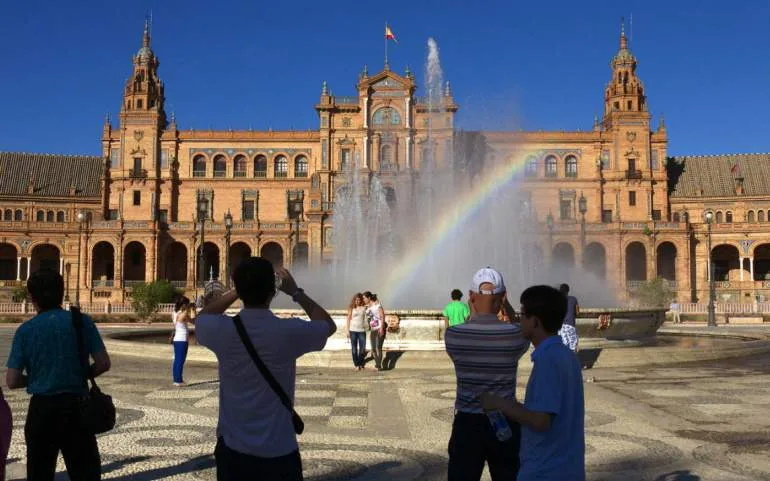
Beyond the great festivals, daily life is rich with the things Seville does best. Flamenco is everywhere for those who seek it out, from intimate peñas in Triana to spontaneous song. The food is generous and distinctly Andalusian — fried fish, cured ham, salmorejo and the endless procession of tapas — best enjoyed the local way, moving from bar to bar. The María Luisa park and the extraordinary Plaza de España offer green calm at the city's edge, and the mild, sunny winters mean the outdoor life barely pauses when the rest of Europe retreats indoors. It is an unhurried, deeply social city, and those who lean into its rhythm rarely want to leave.
Your first practical steps
Once your route is chosen and your move underway, a short sequence of administrative steps turns you from a visitor into a settled resident. None is difficult on its own, but the order and the paperwork matter, and getting them right early saves a great deal of friction later.
- NIE — the foreigner's identification number is the key that unlocks almost everything: opening a bank account, signing a lease, paying tax, arranging services. Securing it is usually the very first practical task.
- Empadronamiento — registering your address at the local town hall (the padrón) is a simple but important step that underpins healthcare registration, school enrolment and later residency formalities.
- TIE — the physical residence card that evidences your legal status in Spain. Once your visa or authorisation is approved, you complete the process by attending an appointment, giving fingerprints and collecting the card.
Alongside these, you will typically open a Spanish bank account, arrange healthcare cover, and register with the tax authorities as your circumstances require. Done in the right order, the whole process is a matter of weeks rather than a source of stress — and it is precisely the part where a dedicated lawyer for your immigration matters earns their keep, by sequencing the steps and handling the appointments so you can focus on settling in.
Frequently asked questions
Is Seville too hot to live in?
The summers are genuinely hot — Seville is one of the warmest cities in Europe — but the city is built for it, and life simply shifts: rest in the afternoon, live in the cool mornings and long evenings. In return, the winters are mild, sunny and a delight, and the outdoor life continues almost year-round.
Do I need to speak Spanish to move to Seville?
More than in the bigger, more international cities, yes — Seville is authentically Spanish and English is less widely spoken day to day. You can arrive with little and manage, but learning the language transforms life here, and effort is warmly received. Happily, the city is a wonderful, welcoming place to learn.
Is Seville a good choice if I want the beach?
Seville itself is inland, on the river, with no beach — that is the honest trade-off. But the Costa de la Luz beaches of Cádiz and Huelva are an easy day trip away, and many residents keep the coast as a weekend habit while enjoying the river and the city the rest of the time.
How do I know which visa route fits me?
It depends on your income, work and plans. The non-lucrative, digital nomad and student routes cover most Seville movers — our quiz and an early conversation will point you to the right one.
General information, not legal advice. Neighbourhood character, costs, schools and services change over time and vary by circumstance, and must be confirmed for your situation.